

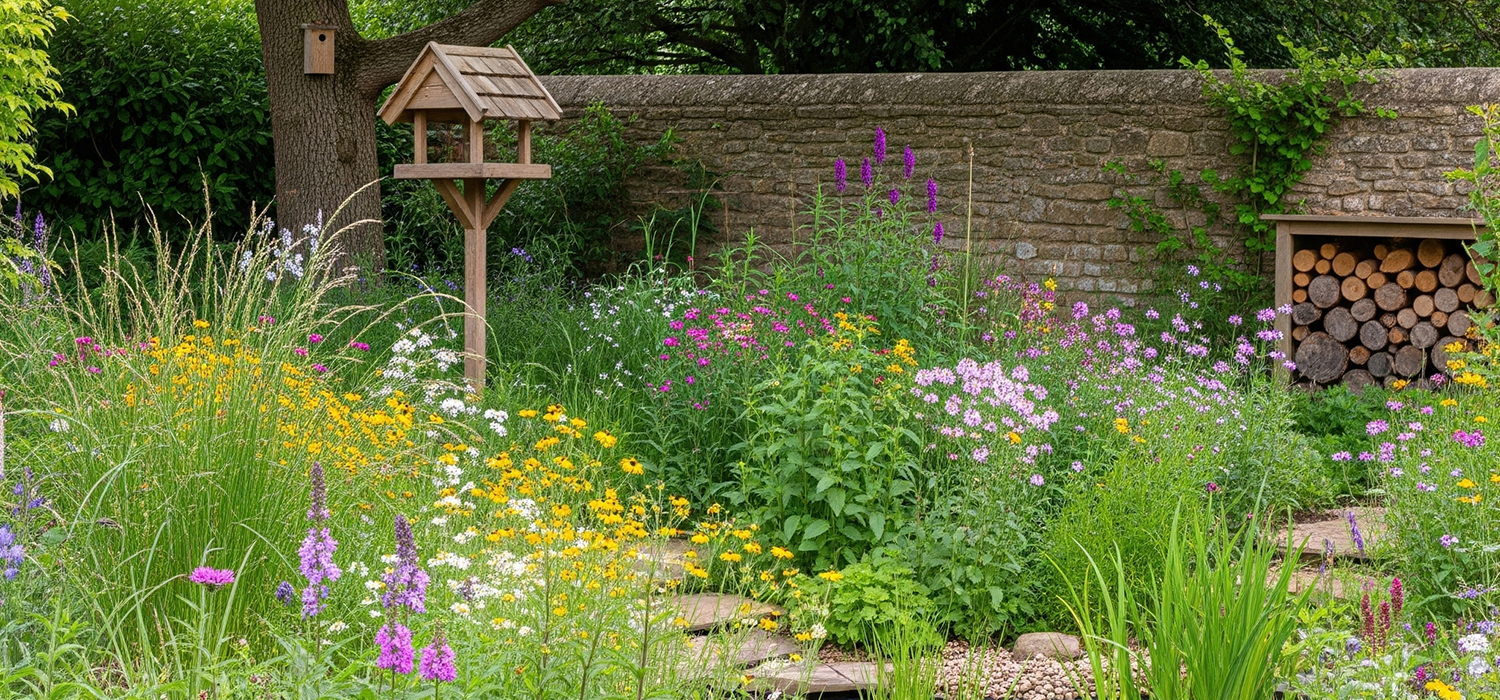
Want more bees, birds, and hedgehogs in your garden? The short answer: plant native, skip the chemicals, and let it get a bit wild! It's easier (and more fun) than you think. Keep reading for tips that work in any UK garden. Got questions about Garden Landscaping? Click here.
British wildlife is under pressure. Urban sprawl, neat lawns, and intensive farming have chipped away at natural habitats. But here's the good news: your garden can help. Even a modest patch of green can become a mini nature reserve.
Planting native wildflowers and shrubs doesn't just look good—it boosts biodiversity. Birds, bees, butterflies, and even frogs are drawn to gardens that mimic natural environments. A log pile here and a pond there, and you're giving nature a fighting chance.
Forget the classroom—your garden's the ultimate outdoor learning zone. Children (and grown-ups too) can watch life cycles unfold, from tadpoles wiggling in the pond to caterpillars chomping through leaves. It’s hands-on learning at its best.
Spending time in a garden buzzing with life is genuinely therapeutic. The sights and sounds of birds, bees and rustling leaves offer a calm antidote to modern life. It’s not just your garden that blossoms—you will too.
Mix your planting to ensure blooms from February to November. Start with snowdrops and hellebores, then bring in foxgloves, lavender, and sedum. Finish the year with ivy and mahonia—lifesavers for late-flying insects.
Shrubs like hawthorn, rowan, and elder tick all the boxes. They’re hardy, beautiful, and bursting with food in autumn and winter. Bonus: they double as brilliant shelter too.
Be picky with your plants. Stick to UK natives and avoid problem species like Japanese knotweed or Himalayan balsam. They might look pretty—but they’re thugs in the garden world.
A simple dish of water can be a lifesaver. Keep it topped up, pop in a few stones for bees to land on, and clean it regularly to avoid spreading disease.
A pond doesn’t need to be grand. A sunken washing-up bowl with sloping sides and some aquatic plants can do the trick. Frogs, newts, and dragonflies will thank you.
Go for thick, layered planting. Blackthorn, hazel, and dogwood create safe spots for birds to nest and hide from predators. A hedge also makes a great natural fence.
Don’t clear every scrap in autumn. A quiet pile of logs or fallen leaves is a five-star hotel for beetles, hedgehogs, and toads. Let it decay—it gets better with age.
Build a bug hotel from stacked bamboo, bricks, and wood with holes. Place it in a sunny, sheltered spot. You’ll be surprised who checks in.
Different birds prefer different boxes—blue tits like small holes, robins prefer open fronts. Mount bat boxes high and away from lights to mimic natural roosts.
Chemicals may kill pests, but they also harm bees, butterflies, and birds. And let’s be honest, do you really want to sit in a garden full of poison?
Compost your kitchen waste, rotate your plants, and try companion planting. Nature’s got plenty of tricks up its sleeve—no chemicals needed.
They’re well adapted, they thrive with minimal fuss, and local wildlife loves them. Win-win.
Choose open, simple flowers. Bees and butterflies can’t access tightly-packed petals. Think cosmos, scabious, and echinacea.
Crab apple, elderberry, and dog rose aren’t just pretty. They offer vital food all year round.
Leave ornamental grasses uncut over winter. Birds feast on seeds, and insects nest at the base.
Nettles in a sunny spot support butterflies like Red Admirals. They’re not weeds—they’re nurseries!
Add rocks for basking, plants for cover, and make sure wildlife can get in and out easily. Leave fish out—they eat everything.
No space for a pond? No problem. A simple bird bath still does wonders. Keep it topped up.
Pick a quiet corner. Pile up logs and branches. Nature will move in quickly—no invite needed.
Don’t mow every inch. Let a patch grow wild. It’s heaven for beetles, frogs, and ground-nesting bees.
Sunny rock piles offer shelter and sunbathing spots for lizards, solitary bees, and spiders.
Rotting veggie scraps might not sound glamorous, but they create food and shelter for countless species.
Different birds have different needs—offer variety. Don’t forget clean water and nesting space.
Keep your planting diverse and avoid spraying anything. Sunny borders are prime real estate.
Cut a CD-sized hole in the fence to let hedgehogs roam. Skip slug pellets—they’ll do the job naturally.
They need damp shelter and somewhere safe to spawn. A shaded pond surrounded by plants is perfect.
Plant densely, layer textures, and let some things die back over winter. Life’s in the mess.
Resist the tidy-up itch. Wild corners are goldmines for wildlife. Embrace the scruff.
Dead flower heads feed birds and look striking when frosted. Win-win.
Time it right—avoid March to August when many birds nest. Shape up your shrubs outside those months.
Keep digging and mowing to a minimum in spring and early summer. Let the next generation get a good start.
Every patch of soil, every plant choice, every wild corner makes a difference. Turn your garden into a sanctuary, not just for wildlife—but for you too.
Other articles our customers have found useful:

