

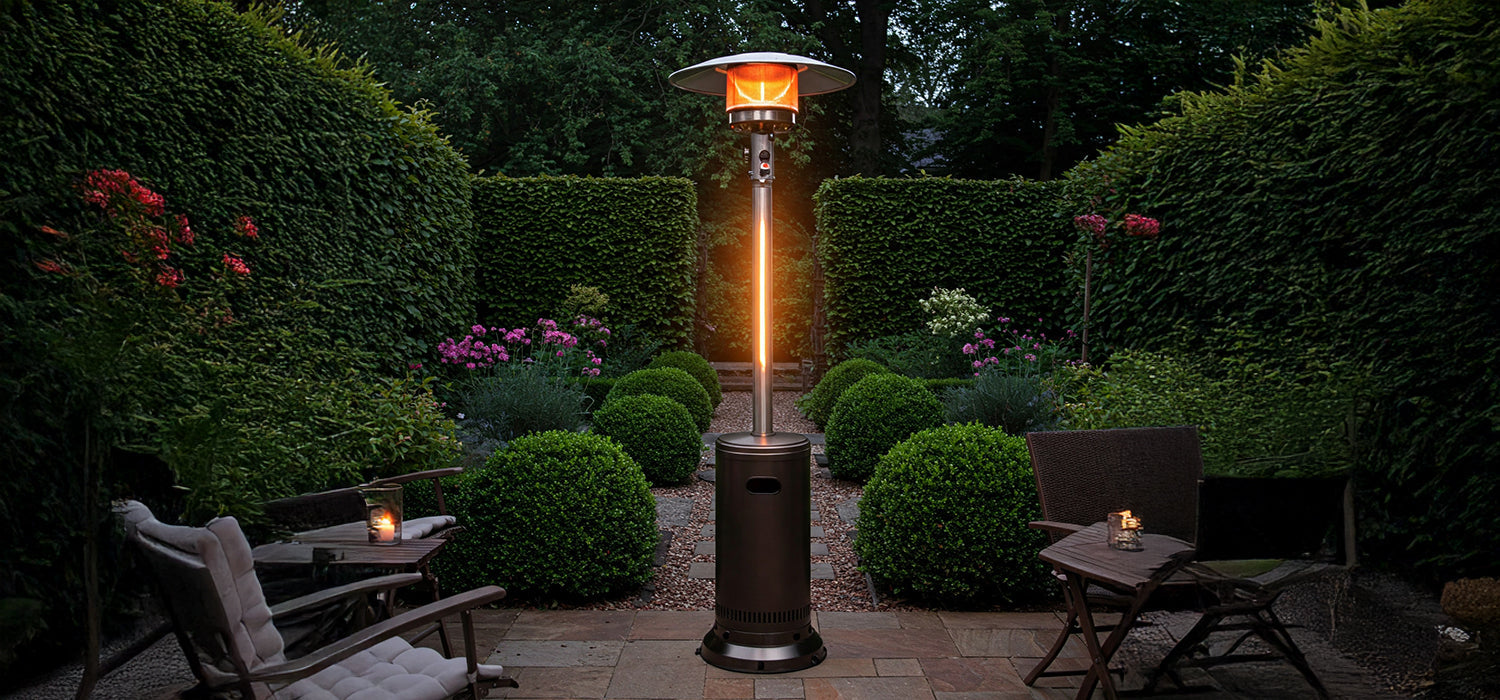
Chilly toes under your pergola? Yes, you can use a garden heater under cover — if you pick the right type and keep things safe. We’ll show you how to stay toasty (without singeing the beams). Browse our Outdoor heating and firepits collection for cosy, safe alfresco vibes.
You’re dreaming of mulled wine, blankets, and a warm garden nook — not a singed pergola roof or smoky disaster. Before you fire up that heater, there are a few key things to weigh up.
Ventilation, clearance, your pergola’s material and the heater type all come into play. It sounds like a lot, but don’t worry — we’re going to walk you through it step by step. The aim? Toasty evenings without toasty timber.
Let’s start with the one thing most of us ignore — the instruction manual.
Every heater comes with guidelines that spell out where and how it should be used. Some heaters clearly say “outdoor open-air use only” — which rules out cosy, closed pergolas. Others give minimum clearances or advice on mounting angles.
Take a leaf out of one Surrey café’s book — they double-checked manufacturer specs before installing slimline infrared heaters under their pergola dining zone. Result? Warm diners and no grilled beams.
A covered space traps heat much like a car on a sunny day — not ideal when you’re adding a heater into the mix.
Without enough airflow, things can get risky fast: heat build-up, carbon monoxide (with gas heaters), and unhappy guests. Let’s break down what you need for both gas and electric models.
Gas heaters need space to breathe — and lots of it. Open sides, gaps at the top, and no walls boxing in the heat are key.
The golden rule? Leave at least 25–30% of the pergola open for airflow. Think of it like barbecuing — you wouldn’t light a gas BBQ in the shed, would you?
Electric infrared heaters are far better behaved in enclosed spots. They don’t eat up oxygen or pump out fumes.
But even they like breathing room. A minimum of 1 metre clearance above and around is wise, so you don’t bake the ceiling. In short: safe, simple, and less faff.
Your pergola’s material changes everything when it comes to heating safely.
Wood, metal, and fabric all handle heat differently. Knowing how yours behaves is the trick to avoiding accidental damage — or worse.
Timber pergolas are gorgeous — but they can dry out and scorch with strong heat. One customer in Kent found this out the hard way after positioning a gas heater too close to a cedar beam… cue singed wood and a hasty rethink.
Metal pergolas (aluminium or steel) shrug off heat better, but painted finishes can still blister. And fabric canopies? Treat them like vampire skin — keep them far from flames or intense heat or risk melting or warping.
If your pergola has a retractable canopy, always slide it back before switching on any heater.
Here’s a no-fuss clearance cheat sheet to keep in mind:
— Gas heaters: at least 2 metres overhead clearance
— Electric heaters: at least 1 metre overhead clearance
Keep side clearances generous too. No cushions, fairy lights or curtains brushing against the heater — it’s asking for trouble. Heat shields can help protect pergola beams if you’re mounting heaters to the walls or posts.
Not every heater plays nicely under a pergola. Let’s help you match the right heater to your space — without the trial and error.
Infrared electric heaters are hands-down the safest, simplest choice for pergolas. They heat people directly (not the air), don’t pump out fumes, and work well in semi-enclosed spaces.
One couple we worked with in Sussex mounted slimline infrared units to their aluminium pergola posts. By tilting them towards their seating area and cracking the louvres slightly for airflow, they stayed snug without roasting their structure.
If you want cosy evenings with minimal worry — infrared’s your mate.
Open flame heaters like fire pits, chimeneas, tabletop heaters and gas patio heaters bring plenty of atmosphere… but they’re high-risk under cover.
Unless your pergola is tall, airy, and very well ventilated, they’re better suited to open gardens. One misstep, and you’re swapping stargazing for scorch marks.
Save the fire pit for wide-open patios — and opt for electric heaters under pergolas.
Yes, you can warm up your pergola safely — but it’s all about using the right kit in the right way. Prioritise ventilation, clearances and materials, and you’ll be golden.
Infrared heaters come out on top for most covered spaces. Want to make your alfresco spot warmer and safer? Browse our Outdoor heating and firepits collection to find heaters that fit your space and style perfectly.
Other articles our customers have found useful:

