

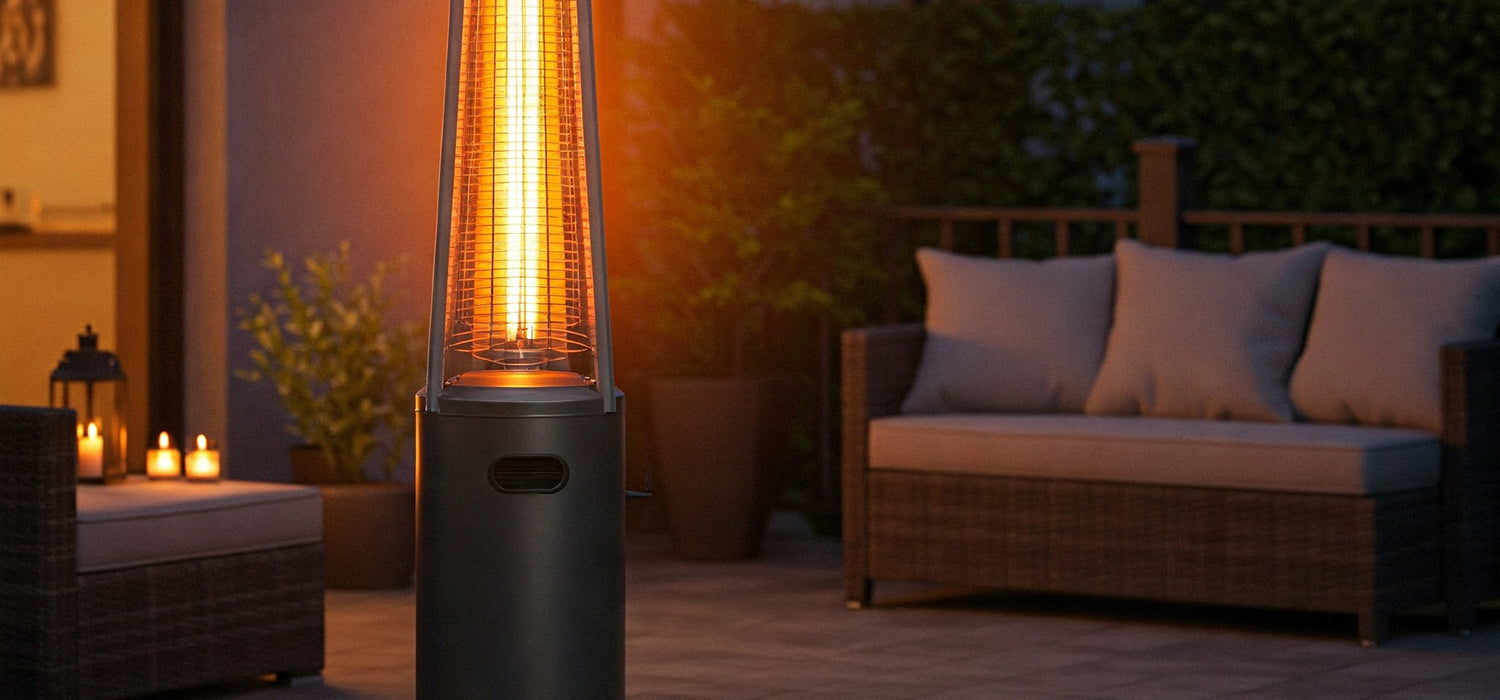
Wondering whether to plug in or fire up your garden heater? Spoiler alert: electric heaters are more energy-efficient than gas! They're cheaper to run, waste less heat, and are eco-friendly to boot. Keep reading for the full breakdown, plus some great tips from our Outdoor Heating and Firepits Collection!
When you’re choosing between electric and gas garden heaters, it’s important to understand how each one uses energy. After all, no one wants to pay more than necessary for their outdoor warmth. So let’s take a closer look at how these two types of heaters compare when it comes to energy consumption.
Energy efficiency is measured in different ways depending on the heater. Electric heaters typically use Kilowatts per Hour (kWh), while gas heaters use British Thermal Units (BTUs). These numbers help us understand how much heat is being produced compared to the energy used.
Electric garden heaters, particularly infrared ones, are known for their ability to provide quick, focused warmth. A typical 2kW infrared heater consumes 2 kilowatts of electricity per hour, which is pretty efficient. The key benefit is that electric heaters don’t waste much energy warming the air around them—they go straight to heating people and objects.
Gas heaters, on the other hand, are measured in BTUs. These heaters burn fuel—usually propane or butane—to produce heat, and their energy consumption is typically much higher. For example, a 12kW gas heater outputs around 12,000 BTUs per hour. But here’s the catch: not all that heat ends up where you want it. A lot of it is wasted warming the surrounding air, not directly heating you.
One of the key differences between electric and gas heaters is how much each unit of energy costs. Electricity is more expensive in the UK, usually around 30p–35p per kWh, while gas is far cheaper. Propane, for instance, costs around £3.50 per 13kg bottle, which gives you a better bang for your buck in terms of sheer heat output. But does that make gas heaters more cost-effective overall? Not necessarily.
Electric heaters are celebrated for their high efficiency, and for good reason. These heaters are designed to use the energy they draw as effectively as possible, with minimal waste.
The key to electric heaters' efficiency is direct heat transfer. Instead of heating the air around you (which can be wasted if there's a breeze), electric infrared heaters focus on warming people and objects directly. It's like standing in the sun—a warm feeling, fast.
Unlike gas heaters, which lose a lot of heat to the atmosphere, electric heaters are very efficient at turning electricity into heat. About 90%–95% of the energy used is converted directly into warmth. No fuss, no excess energy floating around waiting to be useful.
Gas heaters do have their advantages, particularly when it comes to warming larger spaces. However, they also come with efficiency challenges that you should consider before firing one up.
Gas heaters work by burning fuel to create heat, but much of that heat gets lost to the atmosphere. Gas heaters tend to warm up the air around them, meaning you’ll often feel the warmth dissipate faster than with electric models. In windy conditions, this becomes even more noticeable. Essentially, you’re paying for heat that doesn't stay where you need it.
The combustion process in gas heaters also isn’t perfect. While burning propane or butane, some of the energy is lost in the form of carbon dioxide and water vapour. This means gas heaters operate at a lower efficiency than electric models, with efficiency ratings generally hovering between 40% and 60%.
When choosing a heater for your garden, running costs are a big consideration. So, let’s compare how much it costs to run electric versus gas heaters in real terms.
Let’s break it down by the hour. A typical 2kW electric infrared heater costs between 60p and 70p per hour to run, depending on your electricity rates. In comparison, a gas patio heater, which typically uses 12kW of power, costs between £1.50 and £2.50 per hour to run, depending on gas prices.
While electric heaters are cheaper per hour, keep in mind that gas heaters produce more heat at once, which might be a better choice for larger spaces.
Another thing to factor in is maintenance. Electric heaters are pretty straightforward. They’re low-maintenance, usually needing little more than occasional cleaning or a check to make sure everything is functioning correctly. Gas heaters, however, require more attention. You’ll need to replace gas bottles regularly, and the burners may need occasional servicing. These ongoing costs can add up, making electric heaters a more convenient choice in the long run.
In the showdown between electric and gas garden heaters, electric heaters come out on top for energy efficiency. They’re cheaper to run, waste less heat, and are better for smaller, more focused heating. If you have a small to medium-sized garden or outdoor space, electric heaters will be your best bet for both eco-friendliness and cost-effectiveness.
However, if you’re dealing with a large, open space, or you need rapid heat for a big outdoor gathering, gas heaters still have their place. They can provide a quick blast of warmth, but just keep in mind that their efficiency isn’t as high, and you may end up paying more over time.
So, whether you’re curling up with a book on a chilly evening or hosting a barbecue, now you know which heater suits your needs best. Keep it efficient, keep it warm!
Other articles our customers have found useful:

