

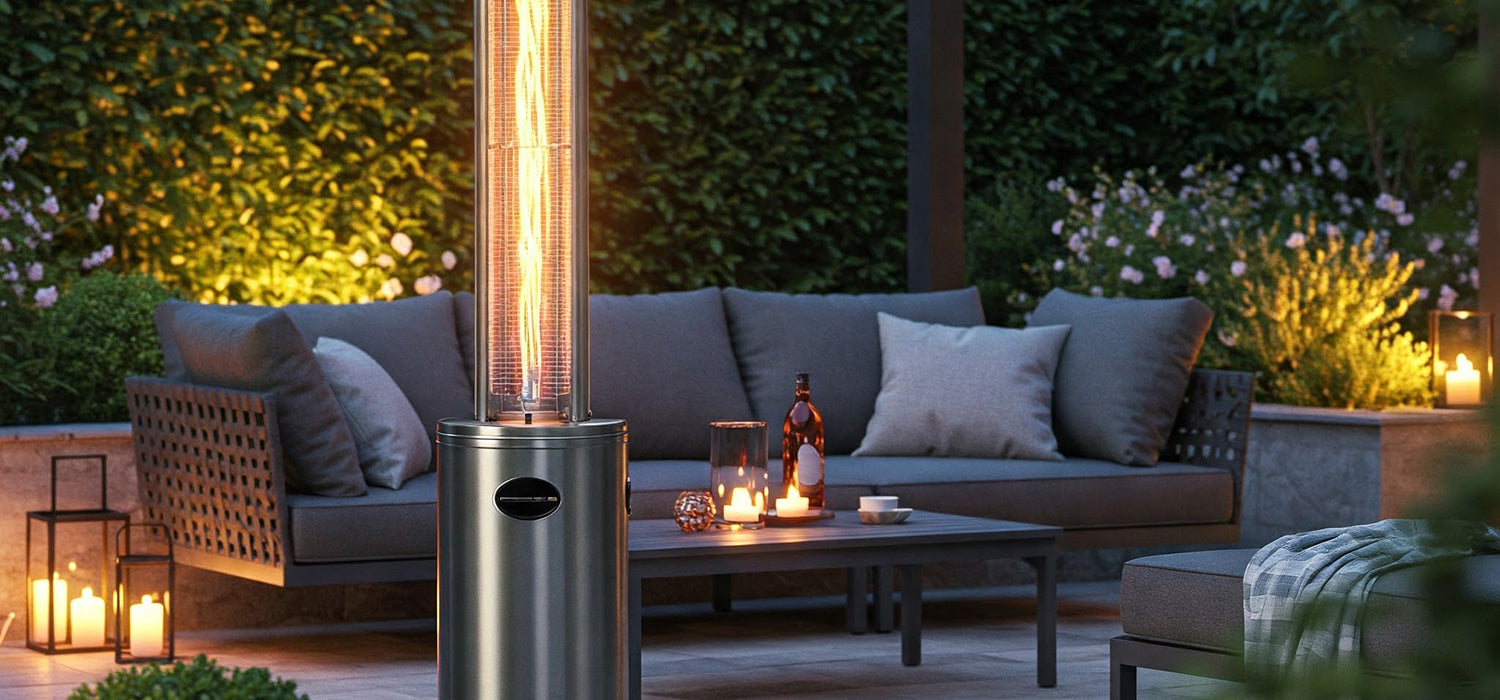
Ever huddled by a heater, toasty on one side, icicle on the other? The short answer: measure your space and match the right BTUs or watts. For cosy, even warmth (no eyebrow-singeing), keep reading. Our Outdoor heating and firepits collection can help you nail the perfect fit — no guesswork required.
Picking a garden heater isn’t just about grabbing the biggest, flashiest model. It’s about creating comfort — whether you’re sharing drinks on a crisp autumn evening or hosting a summer barbecue that stretches into the night.
The trick is getting a heater that fits your space and your plans like a glove. Too small and you’ll be reaching for a blanket; too big and you’ll waste energy (or roast your guests).
Let’s dive into what really matters.
Before you start shopping, step outside and really look at your space.
Think of it like buying clothes — you wouldn’t choose one-size-fits-all and hope for the best, would you?
Is your area a snug balcony, a sociable patio, or a sprawling garden lounge? Each has different heating needs.
Right, tape measure time. Don’t eyeball it — that’s how people end up with patio heaters taller than their house.
Measure the length and width of the area where people actually sit or gather. Multiply those numbers to get square metres.
For example, a patio 4 metres long by 3 metres wide is 12m². That’s the number you’ll use to size your heater properly.
Here’s where layout plays its hand. An enclosed spot with walls, fencing, or a pergola keeps warmth snug and close.
If your garden is wide open to the wind, you’ll lose heat faster. A friend of mine had a coastal terrace that gobbled up warmth in minutes — they solved it by adding glass windbreaks and it made all the difference.
The more sheltered your space, the less heat output you’ll need.
Let’s talk power — not in a scary, technical way, promise. Garden heaters speak two languages: BTUs (British Thermal Units) for gas, and watts/kilowatts for electric.
Knowing what those numbers mean makes all the difference between “ahhh, cosy” and “why did we bother?”
Here’s an easy cheat sheet — no calculator needed:
For electric heaters: multiply your area (m²) by 150 watts
For gas heaters: multiply your area (m²) by 20–30 BTUs
Example time:
A 12m² patio x 150 watts = 1,800 watts
Or about 6,000 BTUs
That’s a good starting point for steady, even heat without overdoing it.
If you live somewhere breezy or you want to enjoy your garden in cooler seasons, you might want a smidge more power.
As a rough guide — add 10–20% extra output if you’re planning to heat chilly spring evenings or frosty autumn get-togethers.
In warmer, sheltered gardens, you can relax and scale back slightly.
Size and power are key — but so is how and where you’ll use the heater. A bit of planning here saves you headaches (and cold feet) later.
Think about where people naturally gather. Is it around a dining table, a sofa set, or dotted about?
If you’re just warming a small zone — say, a four-seater table — a tabletop heater or wall-mounted infrared unit is spot-on.
For bigger get-togethers or sprawling spaces, a couple of smaller heaters spread around works far better than one towering gas behemoth.
This one’s all about flexibility. If you like to rearrange your garden furniture or move with the sun (or guests), go portable.
Tabletop heaters, freestanding gas units or chimineas are easy to shift about. Handy when the party migrates.
If you’ve got a set layout and want something sleek and permanent, wall-mounted electric heaters or a built-in fire pit bring stylish, steady heat.
A client of ours in Surrey swore by mixing both — two fixed wall heaters for the patio set, and a mobile chiminea they could drag closer when needed. Warmth and versatility? Sorted.
Choosing the right garden heater size is like planning the perfect garden party — it’s all about balance.
Measure up, think about how you’ll use the space, and match your heat output to your area and climate. Don’t forget: sometimes two smaller heaters give a more flexible, even warmth than one massive unit.
Ready to turn chilly evenings into cosy catch-ups? Browse our Outdoor heating and firepits collection and warm up your garden the right way.
Other articles our customers have found useful:

