

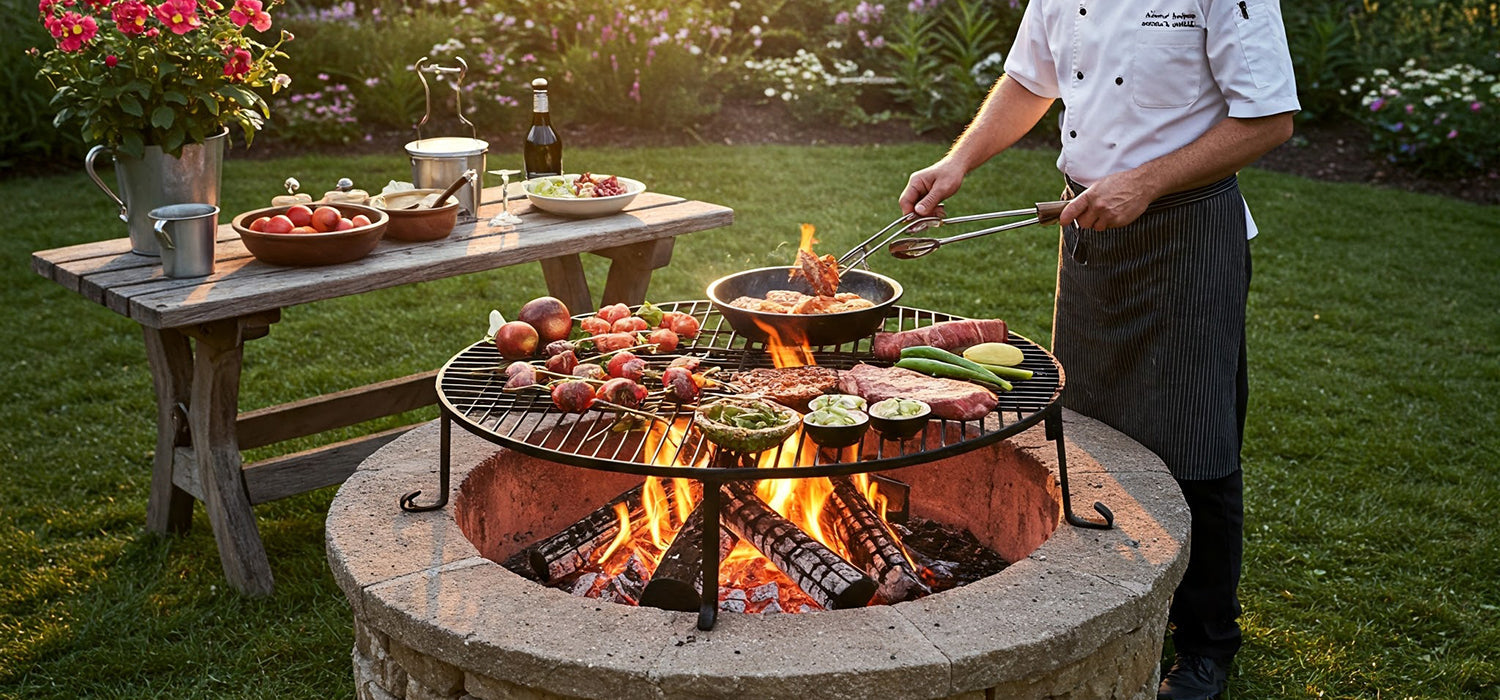
Absolutely, fire pits can be used for cooking—think sizzling sausages and gooey marshmallows—but only if you do it safely. From grill grates to ember control, there’s more to it than tossing a steak on flames. Explore our Outdoor Heating and Firepits Collection and cook up something extraordinary (without burning your eyebrows).
Cooking over a fire pit sounds romantic, doesn’t it? There’s something magical about the smoky aroma drifting through the garden, kids darting about with skewers, and the clink of glasses under the stars.
But here’s the catch—it’s not as simple as chucking a burger on the flames. To avoid flare-ups, undercooked food, or worse—a visit from the fire brigade—you need to get the setup right.
Let’s walk through what you need to know to keep things tasty and safe.
First off, not every fire pit is made with food in mind. Some are purely decorative—better suited to marshmallows than meals.
If you’ve got a fire pit with a built-in grill, cracking! You’re halfway there. These setups are designed to hold heat and keep your food in place—great for grilling burgers, veggies, or even toasting flatbreads.
No built-in grill? No problem. A heavy-duty, aftermarket grate will do the trick. Just be sure it’s stable and fits your fire pit properly.
For the campfire enthusiast, a cooking tripod is a fun option. These let you hang pots or pans over the flames and adjust the height easily. Ideal for stews, chillis, or foil-wrapped veg.
Hanging grates give you more control than fixed ones. Plus, they look the part—very “outdoorsy chef” vibes.
Here’s where things get serious. Fire pit cooking is loads of fun, but it comes with real risks if you’re not careful.
Always give your fire pit breathing room. That means setting it up well away from fences, sheds, trees, and garden furniture. Ten feet is a good minimum.
If you're cooking in a small garden, clear a wide radius around the pit—and keep flammables out of reach.
Standard kitchen tools won’t cut it here. You’ll need long-handled tongs, spatulas, and proper fire gloves.
Ever tried flipping a sausage while dodging sparks? It’s a good way to end up with singed eyebrows or worse.
This one’s non-negotiable. Fires can flare up fast. A forgotten chop on the flames can quickly turn into a scorched mess—or start a dangerous blaze.
Always keep watch while cooking. It's not just safer—it means tastier food, too.
A bucket of water, a hose, or a proper fire extinguisher should always be nearby. Hopefully, you won’t need it—but if something goes sideways, you’ll be glad it’s there.
And no, a bottle of rosé doesn’t count as fire safety gear.
You’ve got the fire going and the grill set up—now let’s talk food safety.
Fire pit cooking isn’t always consistent. One side might be scorching while the other’s barely warm.
That’s why a meat thermometer is your best mate. Burgers should hit 75°C inside, chicken even more. Better safe than sorry.
Give your grill a good scrub before and after use. Nobody wants last week’s lamb chops fused to this week’s halloumi.
Burnt-on bits not only taste foul—they can be unhygienic, too. A wire brush or grill cleaner will sort it out.
Tempting as it is to just walk away, your fire pit needs love after a feast.
Once the ashes are cold—really cold—scoop them out and bin them properly. Leftover embers can stay hot for hours.
Clean off the grate with soapy water or a wire brush, then cover your pit if it’s staying outdoors. It’ll be much easier to use next time, and it’ll last longer too.
Final Words
Cooking on a fire pit is part adventure, part dinner, and all about getting outdoors. With the right tools, a bit of planning, and a touch of caution, you can whip up amazing meals in your own garden.
Just remember—fire is your friend and your responsibility. Respect it, enjoy it, and always have a marshmallow on standby.
Other articles our customers have found useful:

