

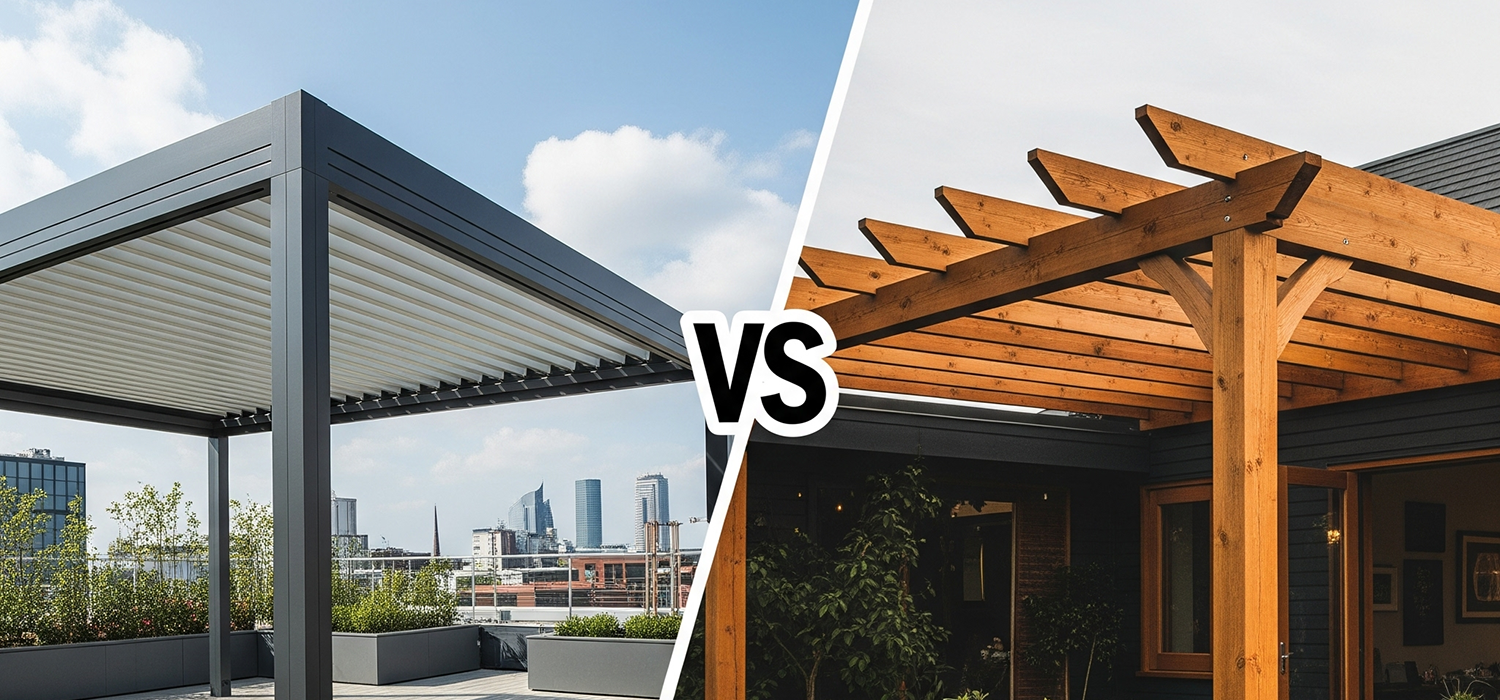
Timber’s got charm, but aluminium pergolas win for low-maintenance muscle. If you’re torn between rustic beauty and sleek durability for your commercial space, we’ve got you covered.
Short answer? Aluminium pergola if you want hassle-free longevity, timber if you’re after warm vibes. Keep reading to weigh looks vs lifetime.
Aluminium pergolas are the practical choice for busy commercial spaces. They’re tough, lightweight, and resistant to rust, which makes them ideal for the famously unpredictable UK climate.
Need something that looks sharp outside your high-street café or hotel terrace? Aluminium’s clean, modern lines fit right in. You can even have them powder-coated in nearly any colour to match your branding.
And the maintenance? Practically none. A simple rinse with water is usually enough. That’s one less job on your to-do list.
That low maintenance does come at a price. Aluminium pergolas can be more expensive up front, especially if you’re opting for custom features or large-scale installations.
They also lack the organic, rustic look that timber naturally delivers. And in hotter months, especially under direct sun, aluminium can absorb heat—so it's worth thinking about built-in shading.
There’s something timeless about a wooden pergola. Whether it’s a beer garden in the countryside or a family-run restaurant with a heritage feel, timber brings warmth and authenticity.
Wood can be painted, stained, carved—you name it. That makes it perfect for businesses with a creative flair or a need to blend with period architecture.
And while premium timber can be pricey, there are budget-friendly options that still look fantastic with the right finish.
But timber does come with baggage. If left untreated, it can rot, warp, or attract pests. That’s bad news for a structure expected to stand up to years of weather and wear.
Regular sealing or staining is essential. Skip a season, and you might find yourself replacing parts far sooner than you’d hoped.
Aluminium wins this one hands down. With proper installation, it can last over 20 years with minimal wear.
Timber? You’re looking at 10–15 years, provided it's maintained well. Go untreated, and it’ll age much quicker—especially in wet or coastal locations.
Aluminium keeps things simple. A hose-down here and there and you're good to go.
Timber requires a lot more love. Annual sealing, occasional repainting, and the odd repair come with the territory. It’s worth factoring those costs into your long-term planning.
Here’s where timber shines. Nothing beats its natural texture and warmth when creating a welcoming, laid-back atmosphere.
Aluminium suits a more modern, minimalist aesthetic. Think city rooftop bar, not country pub. That said, with custom finishes and colour options, you can still make it work almost anywhere.
Aluminium systems often come in modular kits—quick to install and ready to go. Ideal if you need to minimise business disruption.
Timber can be more time-consuming. It often involves bespoke cuts and site-specific adjustments, but the result can be beautifully unique.
Aluminium is 100% recyclable and highly durable. However, its production is energy-intensive.
Timber, when responsibly sourced (FSC-certified, for instance), is renewable and carbon-friendly. But its shorter lifespan means you might be replacing it more often—something to consider in long-term sustainability goals.
Urban restaurants or cafes that want a sharp, modern look
High-traffic areas like shopping centres or hotel patios
Coastal sites where salty air eats into wood
Business owners who value low-maintenance and long-term ROI
Pubs and country venues with a rustic vibe
Start-ups or seasonal businesses with tight budgets
Restaurants or venues looking for a softer, more organic aesthetic
Sites that want custom detailing or artistic flair
Can’t decide? You’re not alone.
Many commercial projects now blend materials—using aluminium for structural support and timber for decorative finishes. It’s a smart way to get the strength of metal with the charm of wood.
For example, a spa might install an aluminium frame pergola but use cedar slats across the top for visual warmth and subtle scent. It’s style and substance in one tidy package.
Final Thoughts
Choosing between an aluminium and timber pergola isn’t just about looks. It’s about how you want your space to function, feel, and evolve over time.
Aluminium pergolas give you lasting strength and minimal upkeep—perfect if you’re in it for the long haul. Timber brings soul and style, with the caveat of regular maintenance.
Either way, investing in the right material can elevate your outdoor space and offer your customers an experience they’ll remember. And that’s what it’s all about.
Other articles our customers have found useful:

