

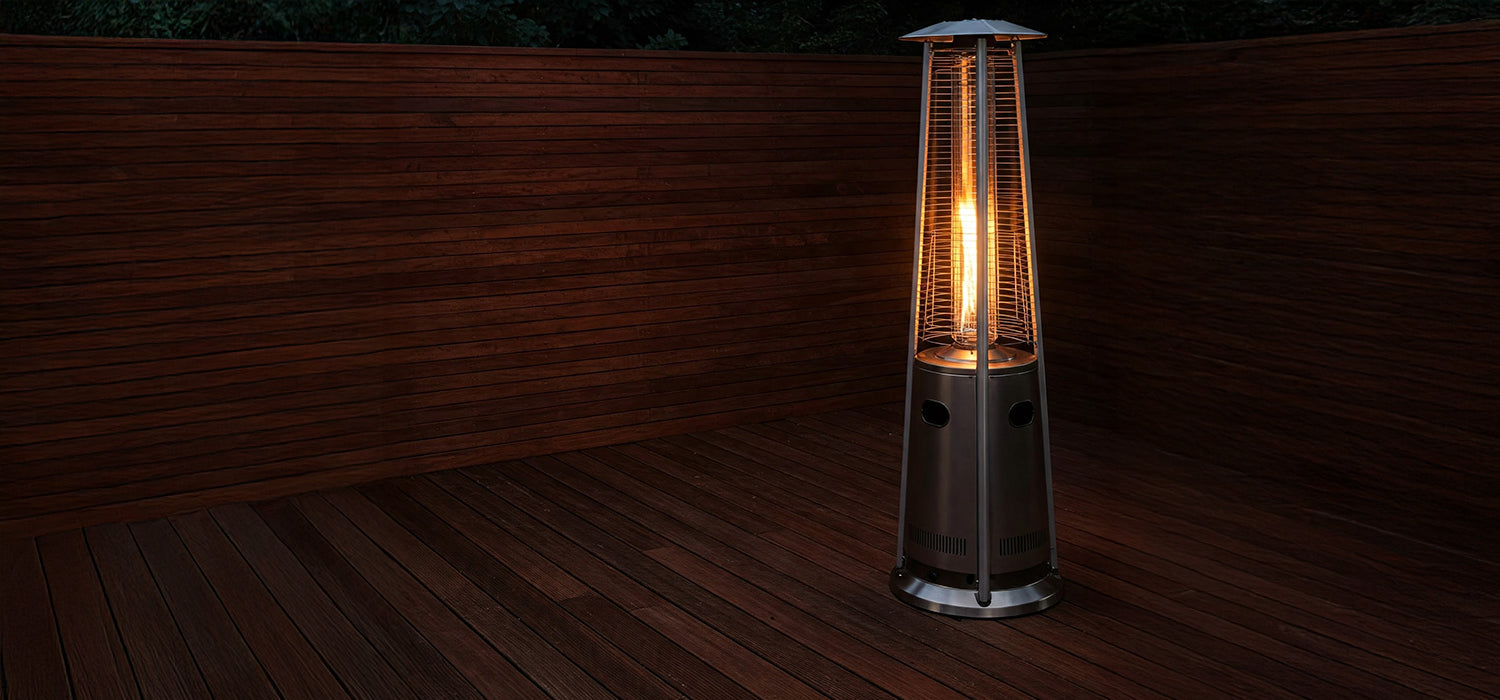
Can patio heaters be safely used on wooden decks or near combustible materials? Absolutely – with the right precautions! In this article, we’ll cover everything you need to know about using patio heaters safely. By the end, you’ll be able to enjoy your heater without worrying about any fire hazards. Plus, we’ll throw in a few tips on how to protect your wooden deck and other outdoor spaces from potential risks. Don’t forget to check out our Outdoor heating and firepits collection for more ideas on keeping your garden warm and welcoming!
Patio heaters are brilliant for extending your outdoor evenings well into the colder months. But before you start sipping that hot cocoa next to your patio heater, it's crucial to ensure you're placing it in a safe spot. The wrong position can lead to serious risks, especially when placed near wooden decks or other combustible materials.
Whether you're using a gas-powered model or an electric one, it’s vital to keep a few simple safety guidelines in mind. A slight misplacement could mean a fire hazard – not what anyone wants on a chilly evening!
First thing’s first: always check the manufacturer’s safety instructions. It sounds obvious, but it’s often overlooked. Every patio heater comes with specific guidelines on how far it should be from walls, furniture, and other materials.
The instructions aren't just there to fill up space – they are your safety roadmap. Stick to them! For instance, some gas heaters may need more room for proper ventilation. By following these guidelines, you’ll reduce the risk of a dangerous fire.
Now, let’s talk about clearance. Most patio heaters need at least a 3-foot (90 cm) gap between the unit and any nearby objects. This distance ensures heat can escape properly without causing anything nearby to catch fire.
It’s like giving your heater some breathing space!
Overhead structures like pergolas or tree branches are another thing to be mindful of. They might look pretty, but they can quickly become a fire risk when a heater is too close. Keep the space above your heater clear – no low-hanging branches or fabric-covered roofs should be near the heat source.
Remember, heat rises, and if it doesn’t have enough room to disperse, you might end up with a potential fire hazard.
The same goes for walls and railings. They might not seem like much of a threat, but when you trap heat against them, it could cause a disaster. Keep your heater at least 3 feet away from any walls or railings to allow the heat to move away freely and prevent accidental ignition. It’s always better to be safe than sorry!
Also, don’t forget about your furniture or plants. They might seem harmless, but they can catch fire surprisingly quickly if they’re too close to the heater. Move cushions, fabric furniture, and any plants at least 3 feet away. This simple step can prevent any potential danger and keep the atmosphere cosy instead of hazardous.
Wooden decks need a little extra attention when it comes to patio heaters. While they look beautiful and offer a great space to relax, wood is highly flammable, especially when exposed to intense heat.
So, how do you keep things safe while still enjoying the warmth? Let’s dive into a couple of considerations.
The key issue with wooden decks is heat dissipation. Wood tends to absorb and hold onto heat, which increases the risk of it igniting. Even if you’re using the heater for just a few hours, prolonged heat exposure can cause the wood to crack or catch fire.
Think about it this way: you wouldn’t put a lit candle on a pile of dry leaves, right? Same goes for your patio heater – give your deck some space to breathe.
A great way to protect your wooden deck is by using a heat-resistant mat or a fireproof barrier. These mats are designed to absorb the heat from the heater and stop it from affecting the wood beneath. This little addition can go a long way in ensuring your deck stays intact while you stay warm.
Now, let’s think beyond just the deck. Your garden is full of materials that might not be the best companions for a patio heater. From furniture to plastic plants, there are plenty of things that can catch fire if they’re not handled properly.
Wood, fabric, paper, and plastics are all highly combustible materials that should never be placed near a patio heater. Cushions, garden furniture, and even decorative pieces made from these materials can easily catch fire if exposed to the heat.
A good rule of thumb: if it’s soft, flammable, or made of plastic, it should be kept well away from the heater.
It might be tempting to place the heater right next to a beautiful chair or potted plant, but doing so could increase the risk of fire. Always be mindful of where you place your heater. The further away from combustible materials, the safer you’ll be.
Think of your heater as a little campfire – keep it in an open area, away from anything that might go up in flames.
By following these simple yet essential safety guidelines, you can enjoy the warmth of your patio heater without the worry of fires or damage to your wooden deck. With a little bit of attention to detail, you’ll be able to keep your outdoor space inviting, cosy, and – most importantly – safe.
So, grab that hot drink, turn on your heater, and enjoy your garden safely. Stay warm, stay safe, and keep your outdoor space the perfect place to relax and unwind!
Other articles our customers have found useful:

