

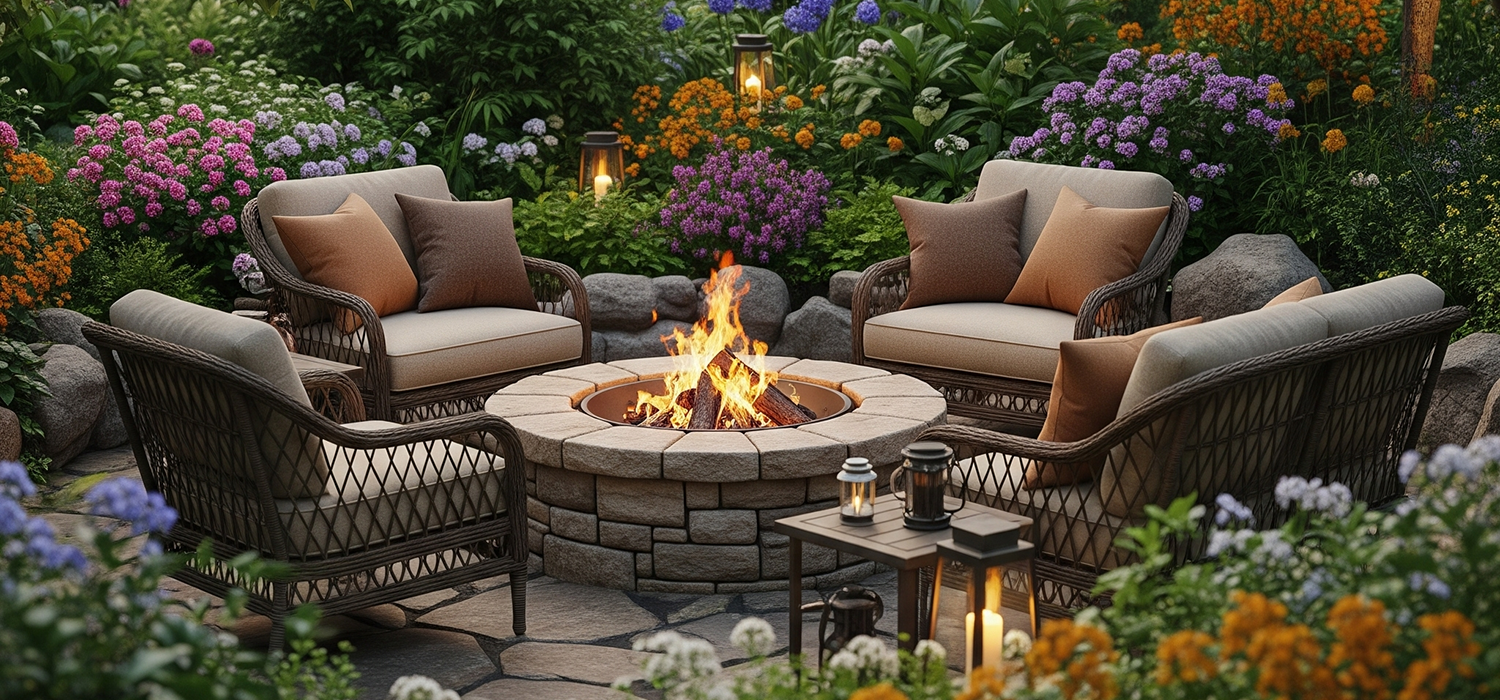
Want your fire pit to feel more forest retreat than theme park eyesore? The short answer: go natural—think earthy materials, lush greenery, and soft, rustic touches. Our Firepit Dining Collection is perfect for that wild-yet-refined vibe. Read on for clever tips to make fire and foliage the best of friends.
There’s something magical about the soft crackle of a fire under the stars. Fire pits don’t just warm your toes—they warm the heart of your garden. The glow they cast is golden, not glaring, and fits beautifully in a setting where nature is the star. Think of them as the fairy lights of the landscaping world—subtle, soothing, and just the right touch.
In any natural garden, you need an anchor. A fire pit does just that. It draws people in, invites conversation, and adds structure without overpowering the soft curves of shrubs and grasses. Picture an iron fire bowl surrounded by curved benches and low lanterns—cozy, isn’t it?
When the evenings get crisp, the fire pit becomes your garden’s best feature. It keeps gatherings going even when the chill sets in. Add a few wool throws, a mug of something warm, and suddenly your September garden feels like July again—just quieter.
Here’s the catch: modern fire pits can look a bit too polished in a wild garden. But don’t worry—there’s a fix. Choose finishes and shapes that echo nature, not fight it. Go for texture over gloss and curves over corners.
Weathered wood has a lived-in beauty that gets better with age. Teak and cedar also stand up to the British weather without needing too much fuss.
Skip the polished marble look. Instead, go for finishes that look like they came straight out of the earth. They feel grounded—and keep your fire area visually calm.
Corten steel is the garden equivalent of a tweed jacket—rugged, timeless, and distinctly British. Its weathered look adds instant character.
Rattan gives that soft, textural touch. Just make sure it’s treated for the outdoors unless you fancy replacing it come spring.
Flashy finishes stick out like a flamingo in a hedgerow. Best to stick to muted tones that whisper rather than shout.
Go with the flow—literally. Curves echo the shapes found in nature and make a seating area feel like a nest.
Harsh angles can clash with the soft landscaping of a natural garden. It’s like wearing stilettos to a picnic.
Keep it low, so the view—and the garden—takes centre stage. Think loungy, not lofty.
Tuck your fire pit into a quiet corner, maybe near a hedge or nestled between flowerbeds. You want it to feel like a hidden gem.
Make use of the natural dips and rises. A fire pit at the foot of a slope feels intentional, not intrusive.
No need for flashy tiles. A simple path made of gravel or bark mulch keeps the look organic.
Sudden changes jar the eye. Let the transition from lawn to fire area feel like a gentle stroll, not a step-change.
These feel like they’ve always been there—solid, settled, and utterly timeless.
Easy to move, easier to love. They’re practical and stylish, especially for more casual or smaller garden spaces.
Less is definitely more. Let the fire and the garden do the talking.
Grasses and perennials help the fire pit zone feel lush without becoming overgrown. Lavender adds scent, too.
Native plants settle in beautifully and won’t throw a fit in British soil.
Let the wild in. A few tendrils of thyme or creeping sedum soften hard edges and make everything feel more relaxed.
Stick to nature’s palette. These tones never clash with the garden.
Think tactile, breathable, and natural. These fabrics wear well and look effortlessly elegant.
Keep the neons for your gym kit. They’ve no place near your petunias.
Logs double as tables and seating. Rustic and practical.
These anchor your layout and echo the rugged British landscape.
Artfully placed branches can look like nature’s sculpture.
Fairy lights through the trees, lanterns tucked beside logs—just enough to guide the way without turning your garden into a runway.
If your lighting could interrogate someone, it’s too strong. Go soft, always.
The gentle gurgle of water makes the space feel serene and secluded. It’s like a spa—but with marshmallows.
Always leave breathing space around your fire pit—dry grass and sparks don’t mix well.
A ring of gravel, paving, or stone beneath the fire pit adds a buffer zone and peace of mind.
Use shrubs or structures to block gusts. They’ll keep the fire flickering gently rather than throwing sparks.
Opt for hardy, low-flame-risk varieties like ornamental grasses, succulents, or evergreens. Skip anything dry or resinous.
Surround it with plants and natural textures. A few stones or a textured finish go a long way.
Absolutely—just make sure they’re treated for outdoor use. They look brilliant and are conversation starters too.
Fire pit furniture doesn’t have to clash with nature. Done right, it becomes part of the landscape—an extension of the garden’s charm. Choose earthy materials, gentle shapes, and subtle styling. And let the fire be the heart of your outdoor escape.
Because in a garden where wild meets warm, even the foxes might pull up a log and stay a while.
Other articles our customers have found useful:

