

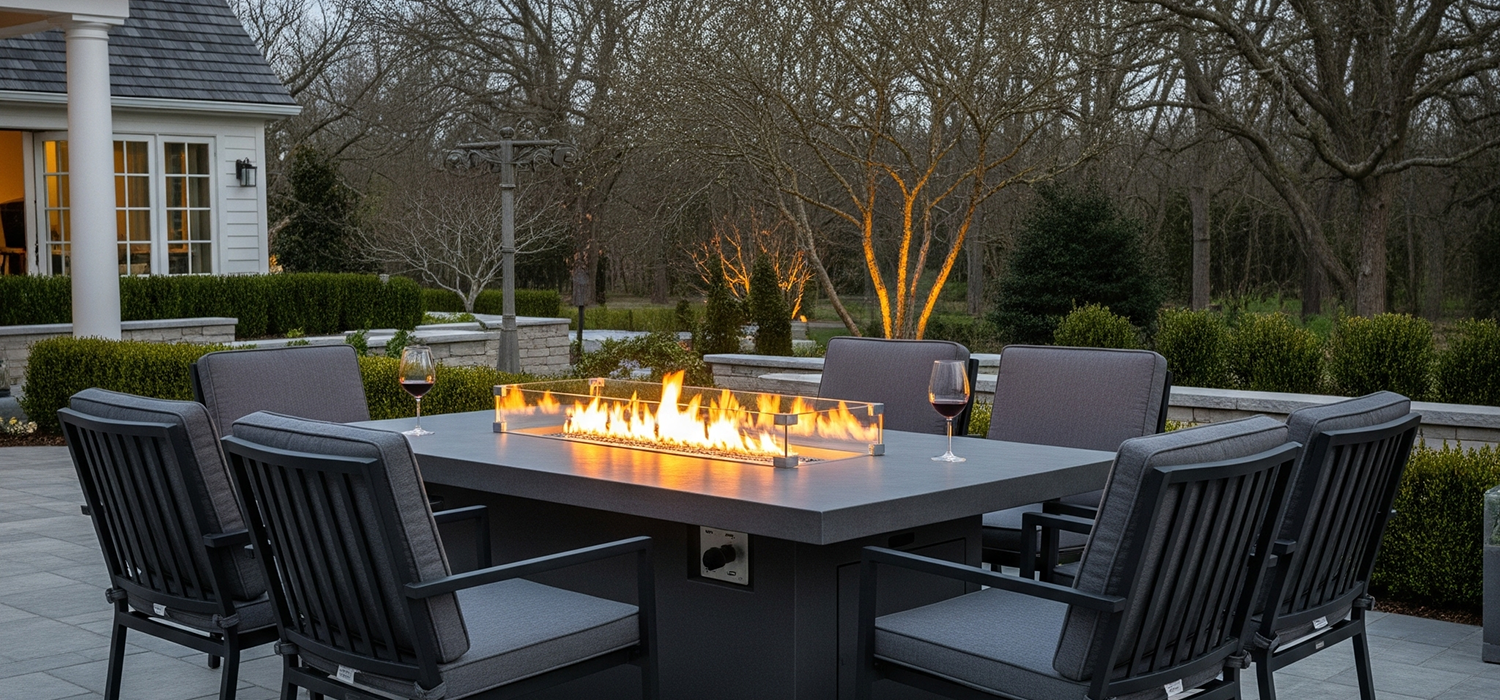
Who knew fairy lights and a Firepit Dining Collection could turn your garden into the hottest dinner spot in town? The short answer: layer lighting for function and flair. Keep reading for playful, practical tips to transform any outdoor meal into a glowing, unforgettable gathering.
Lighting has a magical way of transforming a space. Picture this: you step into a garden with a warm twinkle overhead and the gentle flicker of lanterns on the table. Instantly, it feels inviting. Soft, layered lighting makes people want to linger, turning an everyday meal into something memorable.
Whether it’s a romantic anniversary dinner or a birthday bash with mates, lighting does the heavy lifting when it comes to setting the tone. Candles and warm LEDs whisper intimacy, while colourful festoon lights shout celebration. With a little planning, your garden can wear many hats.
Let’s be honest—no one enjoys eating mystery food. Good lighting helps guests see what’s on their plate and who they’re chatting with. It’s all about striking that balance between visibility and vibe.
Outdoor spaces can be tricky in the dark. Well-placed lights along paths or decking edges prevent stubbed toes and wine-spilling stumbles. Safety doesn’t have to be boring—it can be stylish, too.
The sun may set, but that doesn’t mean the night has to end. With smart lighting choices, your garden becomes a twilight retreat. Think fairy lights draped over pergolas, lanterns tucked into corners, and table lamps casting a gentle glow—your dining space is open well past dusk.
Pros: Add warmth, charm, and instant appeal. Ideal for zigzagging across a dining space for that continental café feel.
Considerations: You'll need something to hang them from—trees, poles or pergolas work best. Choose waterproof varieties and safe power options like solar or outdoor-rated plugs.
Pros: Elegant and impactful, they draw the eye and give structure to a dining area.
Considerations: Make sure they’re built to withstand the elements. Mains connection often means calling in a professional.
Pros: Handy and often built-in, they bring light right where it’s needed.
Considerations: Not all parasols support lighting—check compatibility before buying.
Pros: Totally portable and perfect for layering mood. Cluster them on steps, tables, or along the lawn for soft, decorative charm.
Considerations: Mind the wind if you’re using real candles. Safer options include flickering LED versions.
Pros: Functional and pretty. Great for intimate meals or evenings where everyone’s sharing stories around the table.
Considerations: Choose rechargeable or long-life battery models, especially if mains power isn’t nearby.
Pros: Highlights plant beds or casts drama across brickwork and garden walls.
Considerations: Angle carefully to avoid shining directly into anyone’s eyes.
If your barbecue game runs past daylight, dedicated lights are essential. Whether they’re built-in or clip-on, they help you keep an eye on those sausages without reaching for a torch.
Keep buffet areas or side tables well-lit with targeted spotlights. They’re low key, effective, and keep the focus right where it’s needed.
Warm white gives your garden that golden, homely feel. It’s flattering, welcoming, and ideal for relaxing. Cool white is brighter and more clinical—best saved for prepping and cooking areas.
Being able to turn the brightness up or down lets your garden adapt to the moment. Soft dinner with the in-laws? Dim it down. Party night with friends? Let it shine.
Charges itself during the day and switches on as the sun goes down. Ideal for gardens without outdoor plugs.
No wires, no fuss. Great for moving things around depending on your setup.
Best for permanent setups or larger spaces. It’s a more involved install, but the payoff is long-term reliability.
Control brightness and colour with your phone—perfect for the tech-savvy or the indecisive. It’s modern convenience, right in your back garden.
Set lights to turn on automatically at dusk or when someone walks by. Saves energy and adds a touch of cleverness to your space.
Look for an IP rating of at least IP44 to ensure your lighting won’t short-circuit after the first drizzle.
Tempting as it is to DIY everything, wiring outdoor lighting safely should be left to the experts.
Keep cables tucked along edges or use solar/battery-powered options. No one wants their evening to end with a twisted ankle.
Mix overhead, accent, and task lighting to create a warm, immersive effect. It’s all about creating depth—think theatre stage, but with wine glasses.
Draw attention to your centrepiece—like a stunning Firepit Dining Collection—or show off those perfectly pruned shrubs. Lighting helps highlight your garden’s best bits.
Nobody likes being blinded mid-toast. Position lights to soften shadows and use diffusers when needed. It’s about balance, not brilliance.
Rough rule: multiply the length of your space by 1.5 for a zigzag pattern. A 3x3 metre patio usually takes 10–15 metres.
Nope. Unless they’re specifically designed for outdoor use, they’re not safe. Always check the label.
Use tall freestanding lanterns, solar stakes, or install poles to hang string lights. Flexible, stylish, and structure-free.
Great food deserves great lighting. With a bit of planning and the right mix of lighting types, your garden dining area can become the most enchanting spot in the house. It’s not just about seeing—it’s about setting a scene, making memories, and enjoying every bite under a beautiful glow.
So go on—light it up and dine out in style.
Other articles our customers have found useful:

