

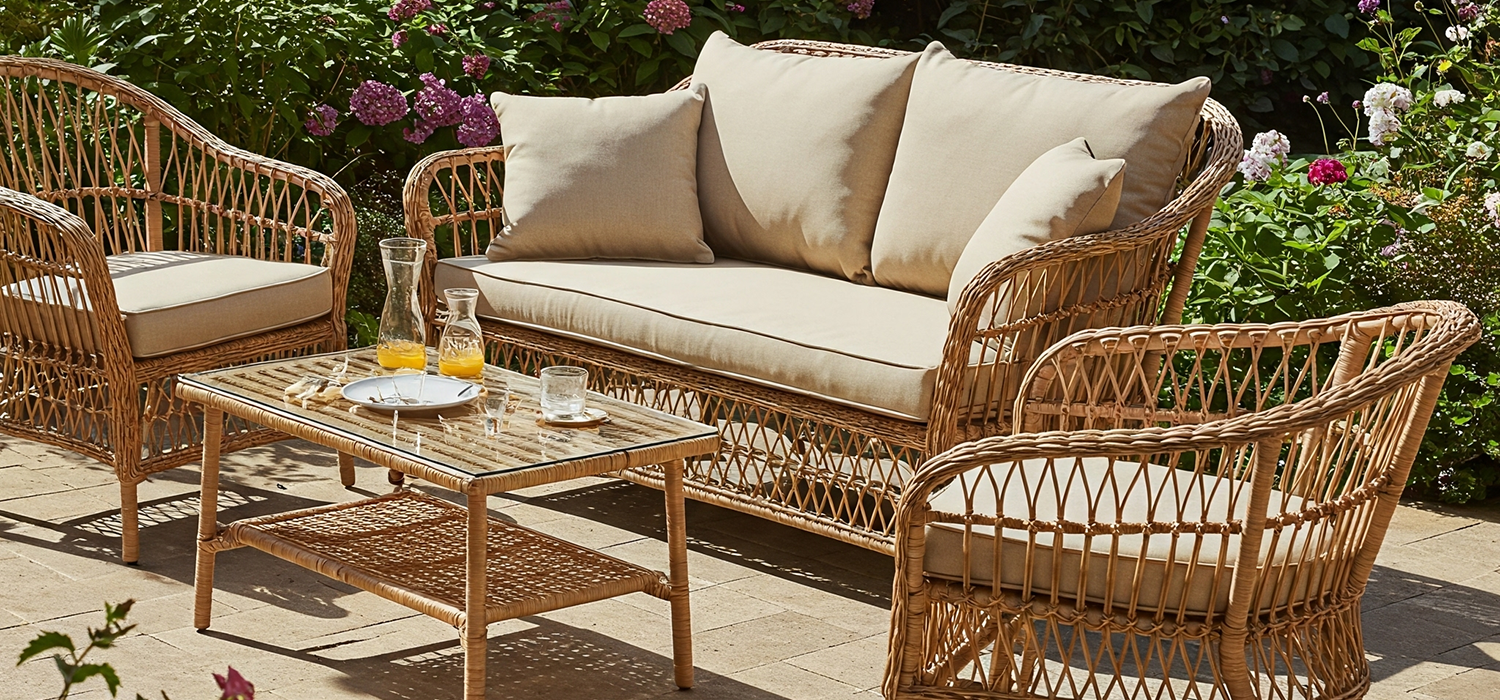
Spilled rosé? Bird left a gift? Don’t worry—cleaning rattan garden furniture is easier than convincing guests to leave your Luxury Garden Furniture set. Just dust, wipe, and deep clean gently. Want yours looking fab for years? Read on for tips that save time, hassle, and your patio’s good looks.
Let’s start with the basics. Not all rattan is created equal. Natural rattan is made from real plant fibres, giving it a wonderfully rustic and organic look. Synthetic rattan—often labelled as PE rattan or polyrattan—is made from resin, designed to handle the British weather like a pro.
While they may look similar at a glance, they behave very differently when it comes to cleaning.
Natural rattan might win on charm, but it loses points on durability. It doesn’t like getting wet and prefers living under cover or indoors.
Synthetic rattan, however, is built for the great outdoors. Rain, sun, spills—it takes them all in stride. That said, it still appreciates a bit of TLC now and then.
Natural rattan is the shy type. It doesn’t like being soaked or scrubbed too hard. A gentle wipe-down is usually all it needs.
Synthetic rattan? A little tougher. You can go in with soapy water, a brush, and even a hosepipe if it’s particularly grubby.
Want to keep things simple? Here's your go-to kit:
Start by removing loose dirt and cobwebs. A soft brush or the brush attachment on your vacuum works perfectly—especially for that dust that loves hiding in the weave.
No fancy products needed. A splash of washing-up liquid in warm water will do the trick for most cleaning jobs.
Think gentle. Avoid anything abrasive. A soft cloth or non-scratch sponge is ideal to lift dirt without damaging the surface.
If your rattan is synthetic, a gentle hose-down is fair game. Just don’t blast it on full pressure like you’re cleaning the patio.
Got a few stubborn spots? These will help:
Mix up a paste with baking soda and water, or try a dash of white vinegar to break down grime. Great for mystery stains or after a garden party gone wild.
If your white rattan looks a bit yellowed, oxygen bleach can bring it back to life. Just be sure it’s oxygen, not chlorine—your furniture will thank you.
Tiny corners and tight weaves need tiny tools. An old toothbrush works wonders for getting right into those sneaky spots.
Start by giving the furniture a good brush or vacuum. Pop off the cushions, and make sure you get into the weave. You’d be amazed at what collects in there—crumbs, petals, the occasional Lego brick.
Dip your cloth or sponge into the soapy water, and start scrubbing. Work your way across each section methodically. If it’s extra mucky, bring in your soft brush. Once done, rinse it down with clean water (hosepipe if you like) to remove any soapy residue.
Apply your chosen paste to the problem area. Let it sit for five minutes, then scrub gently. Wipe clean and let it dry. Easy.
Mix according to the label, dab it onto any stained areas, and rinse thoroughly. White rattan can really bounce back with this little trick.
Don’t skip this bit. Let your furniture air dry fully in the shade—direct sunlight can cause fading, especially when it’s still damp.
Water and natural rattan don’t mix well. Use a barely damp cloth for cleaning, and dry it straight away with a soft towel. No soaking. Ever.
Whether it’s wine, juice, or ice cream (guilty), clean it up right away. The longer it sits, the harder it is to remove—and the more likely it’ll leave a mark.
To keep natural rattan looking lush, treat it occasionally with linseed or teak oil. It restores the shine and keeps the fibres from cracking. Just remember to patch test first.
Light cleaning weekly is ideal, but aim for a deeper clean every season. Set a reminder for spring and autumn—your future self will be grateful.
Invest in a fitted cover. Even better, store your furniture in a shed or under shelter during the winter months. It’s the easiest way to extend its life.
Always follow the care label, but most cushion covers can be popped in the wash. Store them indoors or in a waterproof storage box when not in use. Dry cushions = happy cushions.
Mix one part white vinegar with one part water. Apply it to the affected areas, scrub gently, and dry thoroughly. For stubborn mildew, try diluted hydrogen peroxide.
For synthetic rattan, a UV-protective spray helps prevent fading. For natural rattan, a touch of oil or polish brings back that warm, inviting sheen.
Other articles our customers have found useful:

