

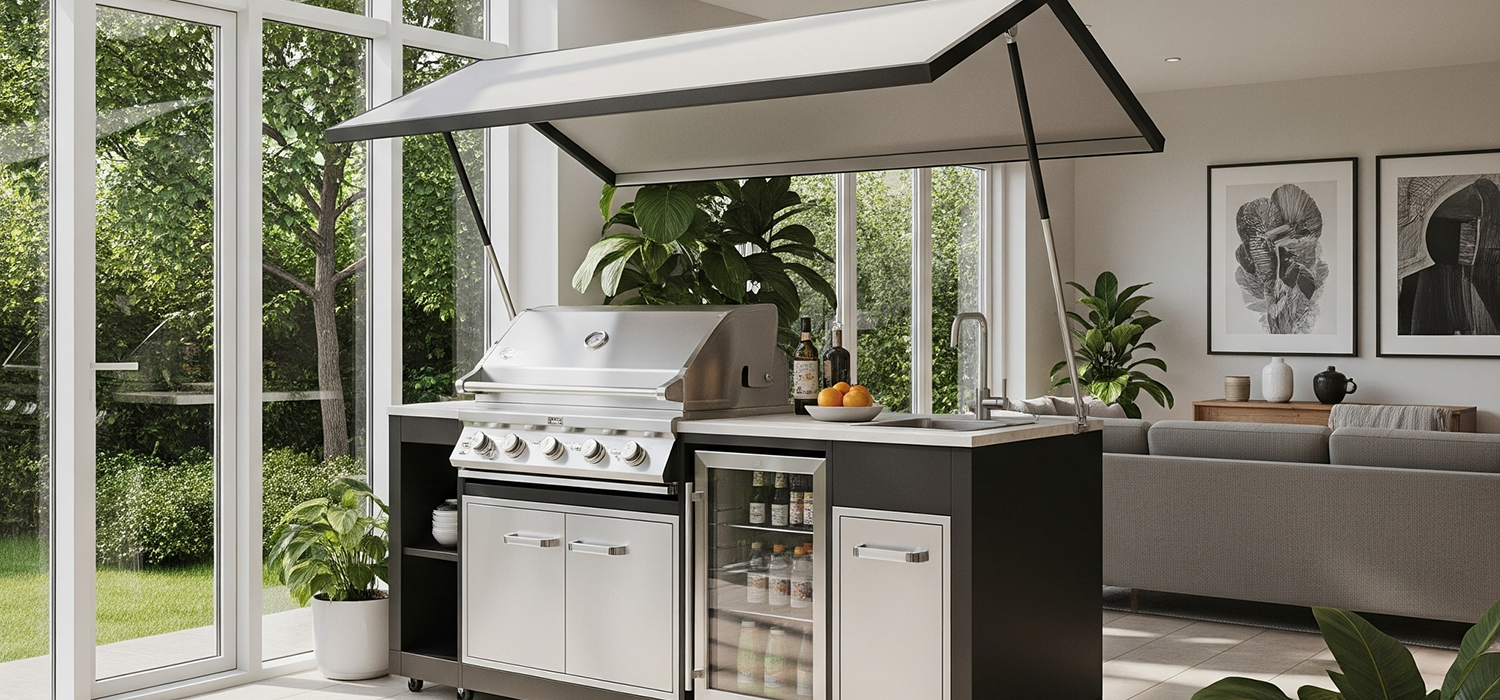
Rain ruined your BBQ plans again? Don’t pack up—bring the flavour indoors! Yes, you can use your Outdoor Kitchen temporarily inside (with a few smart tweaks). From safety tips to clever setups, this guide shows how to cook up a storm—without setting off the smoke alarm.
If your kitchen’s been ripped out and plaster dust now reigns supreme, the thought of another takeaway might make you weep. But what if your trusty outdoor grill could step in as the hero of the hour?
Repurposing outdoor kitchen gear can be a lifesaver during renovation chaos. You stay fed, routines don’t crumble, and there's no need to scramble for expensive alternatives.
Families still need to eat, no matter how many walls have come down. Using portable cooking equipment indoors means you can keep making meals without waiting weeks for the new kitchen to be finished.
It’s all about making life easier and meals simpler during a hectic time.
Ever hosted Christmas dinner and wished you had another oven? That’s where your outdoor cooking station comes in.
Moving parts of it inside can help you churn out roasties, pigs in blankets, or even grilled veg without queueing for kitchen space.
Let’s be honest—grilling indoors sounds a bit rebellious. It adds a splash of novelty to your dinner party and lets you keep cooking when the skies open up.
Plus, there's something undeniably fun about firing up a griddle in your garage like you’re starring in your own cookery show.
Carbon monoxide is invisible, odourless and dangerous. Fuel-burning appliances can release it if not ventilated properly.
Before you even think of firing up that gas burner, make sure there’s ample airflow and a working CO detector nearby.
Open windows wide, position fans for circulation, or set up near an extraction point. Anything that keeps the air moving is a win.
Even with electric appliances, lingering smoke and steam can get overwhelming without proper ventilation.
That sizzling steak isn’t worth setting your curtains alight. Always maintain at least one metre of clearance around hot appliances.
Keep tea towels, furniture, and paper far away from anything with a heating element.
You might never need it—but if you do, you'll be glad it's there.
A small kitchen-rated fire extinguisher can be a literal lifesaver. Keep it close and make sure everyone knows how to use it.
Plugging too many appliances into one socket is a shortcut to blown fuses—or worse. Use appliances as the manufacturer recommends, and don’t push your wiring past its limits.
Tempted to run your outdoor gas grill indoors? Don’t. If you must use gas equipment, have a Gas Safe engineer assess the setup.
A quick check can save you a massive headache (and a fire risk).
These are meant for the great outdoors. Bringing them in is risky and generally not worth it.
The carbon monoxide alone is a no-go. Stick to alternatives.
Now we’re talking. Electric grills, especially those marked for indoor use, are much safer.
Place them by a window, use a splash guard, and you’re good to go.
Outdoor-rated fridges can work indoors for a while. Just check they’re stable and dry—don’t plonk them on a carpet or near water sources.
They’re great for keeping drinks or sides cool while your main fridge gets sorted.
Rolling prep stations are brilliant for temporary setups. Stainless steel or wooden tops give you a work surface in any room.
Just pop a mat underneath to protect your floors from scratches or spills.
A portable sink with a drain bucket? Game-changer.
As long as you’ve got a place to dump the greywater (safely!), you can wash veg or rinse dishes without needing full plumbing.
Pick a space with room to breathe—literally. A garage with open doors or a spacious utility room can work wonders.
Avoid tight corners and choose somewhere you can move freely and ventilate well.
Being near a window, extractor fan, or back door gives you a shortcut to fresh air.
It also helps smells and smoke escape instead of hanging around your house.
Grease and spills happen. Lay down mats, tarps, or even an old rug to catch messes and protect your flooring.
Bonus: makes clean-up ten times easier.
Keep a grease tray under your grill. Have paper towels or cloths on standby.
Don’t let mess pile up—it only takes one splash to cause a slip.
Use plastic crates, fold-up shelving or a trolley to keep your cooking gear handy. Stack smart to avoid clutter.
A hanging rack or kitchen caddy works wonders. Have knives, tongs, and spatulas where you can reach them without digging through boxes.
Not everything belongs inside. Charcoal grills, open flames, and bulky gear can pose serious risks.
Always check equipment guidelines and stick to indoor-rated appliances when in doubt.
Don’t forget your trusty slow cooker, air fryer or induction hob. These modern miracles make gourmet meals with little fuss and zero risk.
A simple one-pot meal can be just as comforting as a grilled steak.
Bringing your outdoor kitchen indoors can be a clever fix during renovation chaos, rainy weekends, or entertaining marathons.
With proper planning and safety in mind, you’ll cook comfortably without missing a beat. Just remember: ventilation is vital, some equipment stays outside, and your fire extinguisher is your best mate.
Enjoy the flavours, avoid the disasters—and maybe even discover your new favourite way to cook indoors.
Other articles our customers have found useful:

