

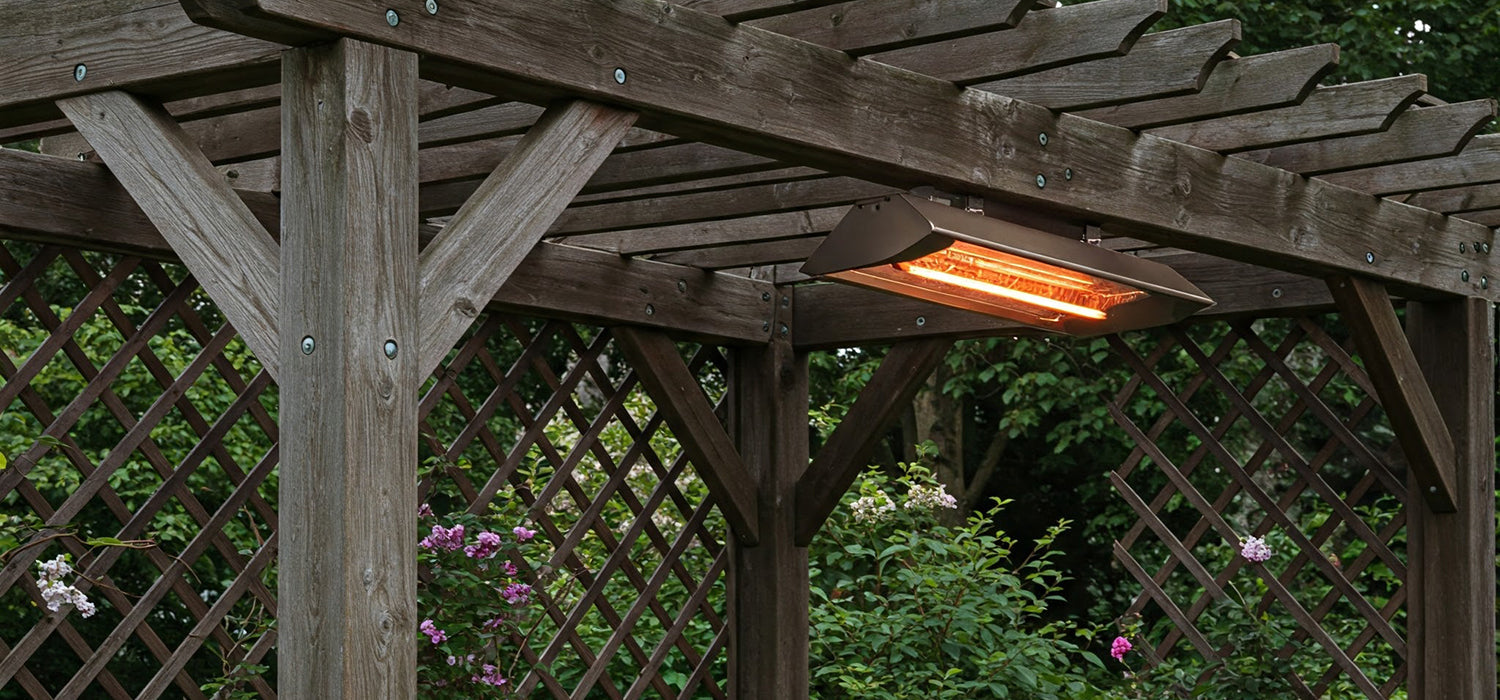
Dreaming of enjoying your pergola all year round? To safely install a heater in your wooden structure, choose the right type, follow safety precautions, and get the wiring or gas setup right. Keep reading for tips and explore our Outdoor Heating and Firepits Collection to warm up your space in style!
When you’re planning to install a heater in your pergola, safety is the most important factor. Heaters generate heat, and when mounted incorrectly, they can pose a serious fire risk. You want your outdoor retreat to be cosy and inviting, not a potential hazard!
The key to safe installation? Ensure your heater is securely mounted with the right hardware and placed with proper clearance from the surrounding structure. Let’s break down these critical steps.
You wouldn’t trust your DIY shelves with flimsy screws, so why would you do the same for your heater? Choosing the right mounting hardware is essential. Whether you're mounting an electric heater or a gas-powered one, the hardware needs to support the weight and withstand heat. For a sturdy installation, always opt for heavy-duty screws and high-quality brackets.
If you're unsure of what you need, don’t be afraid to consult an expert or the manufacturer’s recommendations for your specific model. A small investment in the right mounting gear can make a world of difference in the long run.
Not all pergolas are created equal, and neither are all heaters. Before mounting, take a close look at your pergola’s structure. Some pergolas may need additional support or reinforcements, especially if you're opting for a heavier heater. It's always a good idea to double-check the weight of your heater and confirm that your pergola’s beams can bear that load. Better safe than sorry!
This is non-negotiable: use strong screws and brackets that are up to the task. Outdoor heaters generate a lot of heat and weight, so weak screws just won’t cut it. Choose screws designed for exterior use to ensure they can withstand the elements. The last thing you want is for your heater to come loose during a cold winter evening, potentially causing damage or injury.
One of the most important safety tips when installing a heater in a wooden pergola is ensuring adequate clearance around the heater. Without the proper space, you’re setting yourself up for possible overheating and fire hazards.
The basic rule of thumb is to leave enough space between the heater and any surrounding wooden beams or furniture. This prevents any accidental overheating or risk of flames touching combustibles.
When positioning your heater, always keep it at least 12-18 inches away from wooden beams, supports, or any other surfaces. This distance helps to dissipate the heat safely and ensures nothing gets too hot. Remember, a few extra inches of space can be the difference between a toasty, safe pergola and a potential fire hazard.
Heat needs to be able to circulate freely, so ensure the space around your heater is not blocked by furniture, cushions, or other objects. Overcrowding the area could lead to the heater overheating, and in the worst-case scenario, it might even ignite nearby materials. A clear space around the heater will allow it to function properly and safely.
Electric heaters are often the easiest and safest choice for many, but electrical setup requires special attention. To avoid risks like short circuits or electrocution, there are some key things to consider when setting up the wiring.
Outdoor conditions can take a toll on wiring, so it’s crucial to ensure your electrical connections are well-protected. Use high-quality, weather-resistant cables that are suitable for outdoor use. The last thing you want is for a cable to deteriorate from moisture or to come into contact with wood and create a dangerous situation.
Make sure the wiring doesn’t touch any part of the pergola’s wooden structure, especially in areas prone to rain or dampness. One small spark or exposed wire can lead to costly repairs—or worse, a fire.
Running electrical cables through a conduit (protective tubing) or using weatherproof boxes can provide an extra layer of protection. These outdoor-rated options prevent the cables from getting damaged by rain, wind, or UV exposure. A weatherproof electrical box also shields the connections from moisture and dirt, ensuring that everything stays secure and functional.
Gas heaters provide a powerful source of warmth, but they require more attention to detail in their installation. Unlike electric heaters, they come with the added responsibility of gas line installation, which can be risky if not handled properly.
Gas leaks are a major concern, and for a good reason. Even a small leak could lead to dangerous situations, so it’s essential to hire a professional when installing a gas heater. A trained technician will ensure the gas line is properly connected, sealed, and functioning safely. It’s not worth taking shortcuts when it comes to gas installations—always call an expert.
The gas line should be installed away from any wooden parts of your pergola to prevent heat buildup and avoid potential fire risks. The gas lines need to be firmly secured along their path, keeping them insulated and shielded from direct heat. Proper installation ensures that the gas line won’t be exposed to damaging elements or become a fire hazard.
Other articles our customers have found useful:

