

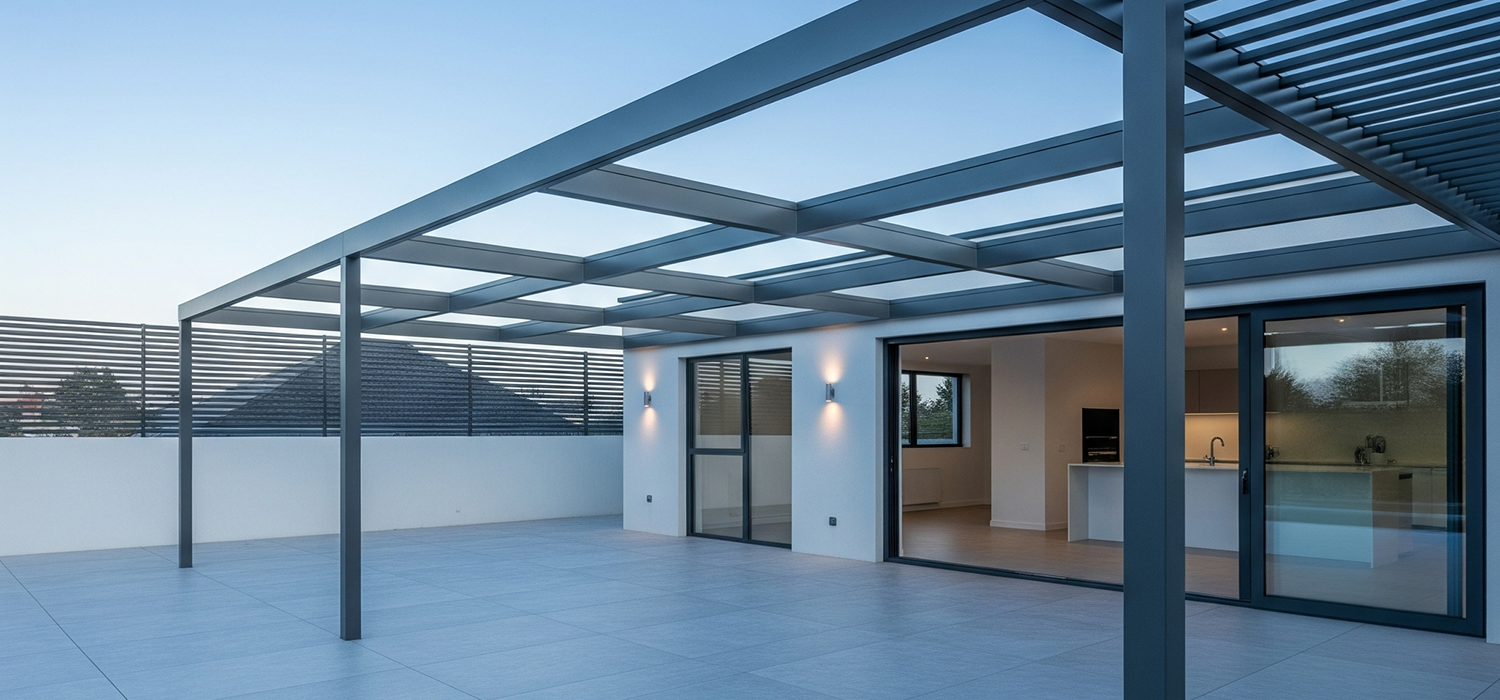
Thinking of popping an aluminium pergola on your sleek porcelain patio? Short answer: yes, you can! But don’t grab the drill just yet—there’s more to it than meets the tile. From cracked slabs to clever fixes, here’s how to do it right (and avoid a very expensive whoops).
You absolutely can install a pergola on porcelain tiles—but you’ve got to do it the right way. The real question is what’s underneath the tiles, not just what’s on top.
Think of it like placing furniture on a rug. It might look solid, but if the floor beneath isn’t stable, things will shift and wobble.
Porcelain has become a go-to for UK patios. It’s stylish, modern, and can imitate stone or wood without the fuss. Even better, it’s slip-resistant, frost-proof, and doesn’t stain easily.
And let’s be honest—who doesn’t love the idea of a low-maintenance garden that still looks like a designer dream?
Despite its durability, porcelain isn’t indestructible. It’s incredibly dense and hard, which means it resists wear beautifully—but it also means drilling can be a challenge.
Push too hard or use the wrong bit, and you'll be staring at a cracked tile with no easy fix.
This is the biggest worry for most homeowners. One slip, one aggressive turn of the drill—and that expensive tile is toast.
That’s why it’s crucial to take your time, use the right tools, and mark everything clearly before making a single hole.
Tiles aren’t what hold your pergola in place—it’s the base underneath. If your tiles sit on a concrete slab, you’re golden. If they’re on sand or gravel, you might be asking too much of your tiles.
In those cases, you’ll need to look at different mounting options or even reinforce the base first.
Start with your pergola’s feet. Bolt-down base plates are ideal for solid concrete bases. Post anchors work too, but they need precision.
Freestanding models? They’re a possibility—but more on that later.
This is where you slow down and triple-check. Use masking tape over the tile to stop the drill bit from slipping, and mark your spots carefully.
Every millimetre matters.
Before you drill, know what lies beneath. Pipes, wires, and surprise surprises are common—especially near walls or outdoor kitchens.
A quick scan with a cable or pipe detector could save you a very expensive headache.
You’ll want specialist anchors that work with both the tile and the substrate underneath. Resin anchors are a strong choice, while sleeve anchors with expansion control help prevent pressure cracks.
Avoid anything generic—this is not a job for standard wall plugs.
Opt for stainless steel screws. They won’t rust or stain your tiles, even after a wet winter. It’s a small detail that pays off long-term.
You’ll need a diamond-tipped bit—nothing else will do. It cuts through the tile without causing chips or splits.
It’s worth investing in, or better still, hire a pro to drill the holes for you.
No hammer drill here! Go slow, use steady pressure, and keep things cool by spraying water. Let the bit do the work—it’s not a race.
Drill just the right size for your chosen anchors. Too tight, and the anchor won’t seat properly. Too loose, and it won’t hold under load.
Clean the hole, inject the resin, insert the threaded rod, and let it cure completely. This gives you a rock-solid hold, perfect for exposed areas.
With expansion anchors, insert them gently and tighten evenly. Overdoing it could pop the tile—so go steady and don’t rush.
Line up each base plate or bracket carefully. Once you’re confident in the position, bolt them down and give everything a final check.
Use outdoor silicone to seal around each fixing. It keeps water out, prevents rust, and protects your patio from freeze-thaw damage over winter.
Not ready to drill through your pristine patio? A freestanding pergola with weighted bases could be the answer.
They’re great for renters or short-term use, and you won’t risk damaging your tiles. But they’re not ideal for large, heavy pergolas or windy locations.
Always check with the manufacturer before choosing this route.
Some pergolas come with integrated ballast bases—essentially heavy feet that anchor the structure without bolts.
These distribute weight more evenly across the tile surface, which lowers the risk of cracking. Add rubber pads beneath for extra protection.
Every few months, give your pergola a wobble test. Check bolts, brackets, and anchor points for any movement or signs of rust.
A quick tighten now can save you a major repair later.
Keep your tiles looking sharp with a simple sweep and the occasional jet wash. Avoid acidic cleaners or metal brushes—they’ll damage the finish.
If you spot movement, cracks, or hear odd noises in the wind—don’t ignore them. Investigate right away, and if needed, bring in a pro to sort it before things get worse.

