

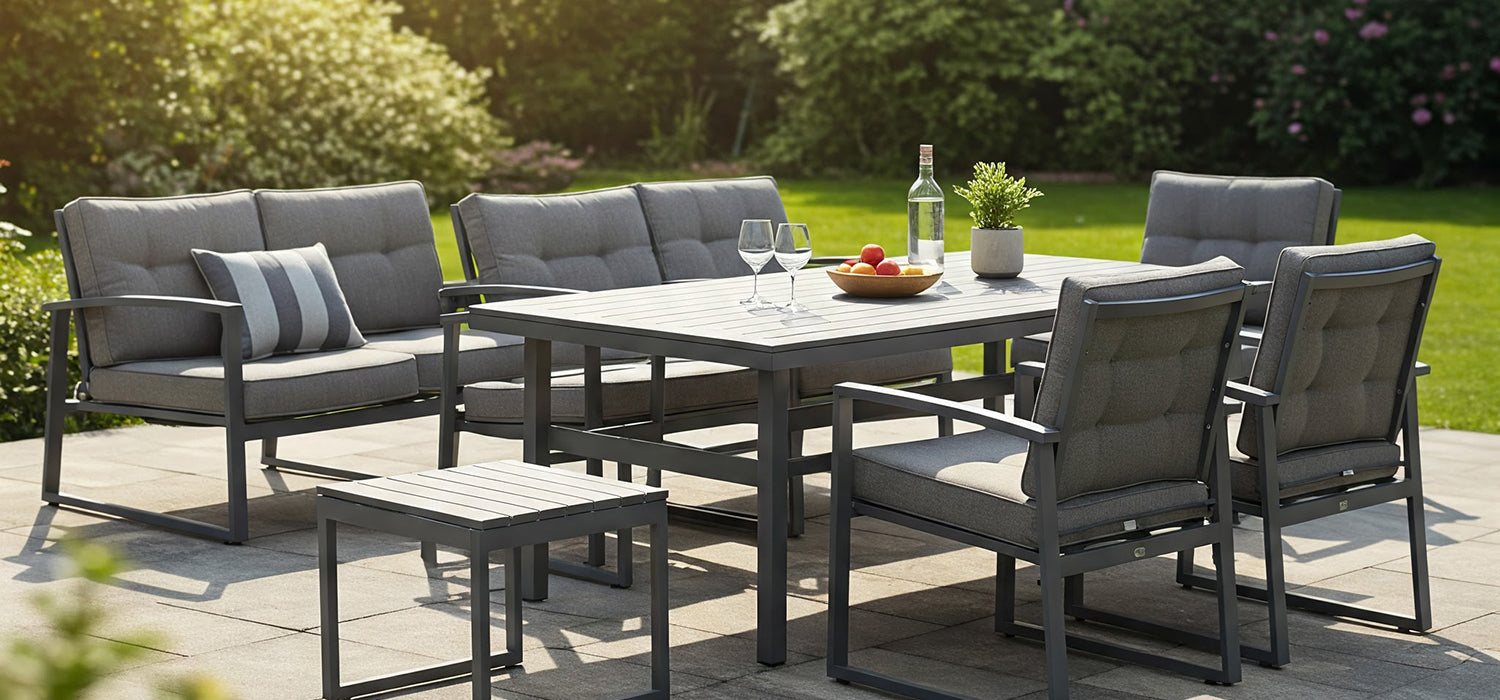
Rain, shine, or surprise hailstorm—your garden furniture cops it all. Teak, aluminium, and synthetic rattan top the list for most weather-resistant outdoor furniture (yes, even for corner sofas). Want stylish, durable pieces that survive soggy British summers? Keep reading to find materials, smart buys, and care tips that actually work.
Let’s face it — British weather has a flair for drama.
One minute you’re basking in the sun with a G&T, the next you’re legging it indoors as a downpour ruins the barbecue. If your outdoor furniture could talk, it would probably ask for hazard pay.
That’s why knowing exactly what your garden gear is up against matters. Different materials face different foes — and here’s what’s in the ring.
If there's one thing we know well, it’s rain. Our gardens get their fair share (and then some).
Furniture that soaks up water can swell, rot or even grow a fine crop of mould. Materials that repel water or dry quickly stay looking smart and ready for use — even after a surprise drizzle.
On those rare glorious days when the sun does grace us, UV rays get to work fast.
Left unprotected, fabrics fade, plastic cracks, and wood dries out quicker than a forgotten scone. Picking materials that shrug off UV damage means your furniture looks fresh summer after summer.
Ever watched a garden chair bounce across the lawn during a storm? It’s not ideal.
Heavier, solid materials (or those cleverly designed with stability in mind) avoid becoming airborne. No more rescuing your corner sofa cushions from the neighbour’s pond.
Frosty mornings followed by balmy afternoons? Standard British springtime.
Furniture needs to handle expanding and contracting as temperatures swing — without warping, cracking or snapping like a dry twig. The best materials barely bat an eyelid.
Now for the good news — some materials are built to take all of this on the chin.
These are the champions you want on your patio squad.
Think of HDPE lumber as plastic’s overachieving cousin.
Made from recycled materials (so it ticks the eco-friendly box), it’s waterproof, UV-resistant, and refuses to crack, peel or splinter. It’s got a reassuring heft too — no chance of it blowing over with a stiff breeze.
It’s a solid pick for dining sets, benches and even corner sofas if you’re after something low-maintenance and long-lasting.
If it’s tough enough for yachts bobbing in salty seas, it’s more than ready for your patio.
Marine-grade polymers don’t blink at rain, mildew, or fading. They don’t corrode or crack either. You’ll often see them used in chunky loungers and sleek storage benches. Best of all? Maintenance is pretty much a quick wipe now and then.
Aluminium on its own resists rust, but give it a powder-coated finish and you’ve got a material that laughs in the face of both rain and sun.
It’s lightweight (handy for rearranging the garden for a party), strong, and stylish. It’s a go-to for dining sets, sun loungers and modular corner sofas — especially if you like to change things up seasonally.
Ah, teak — the Rolls Royce of outdoor wood.
Packed with natural oils, teak naturally resists moisture, rot and pesky insects. Leave it untreated, and it gently fades to a classy silver-grey (very coastal chic). Treat it with oil, and it stays honey-gold.
Yes, it costs more. But it’ll stick around longer than that gnome you keep meaning to repaint.
Not everything on the shop floor is ready to brave British weather straight out of the box. Here’s what needs extra TLC if you’re set on using them outdoors.
Natural rattan looks stunning — there’s no denying it. But it’s a diva in the rain.
It soaks up moisture, warps and cracks over time. If you love the woven look (who doesn’t?), synthetic rattan is your best bet. It mimics the charm but can handle a soaking without sulking.
Woods like pine, acacia and oak bring warmth and character, but they aren’t naturally as tough as teak.
If they’re not sealed, painted or oiled regularly, they can rot, crack or lose their looks fast. Love the rustic vibe? Just be ready for an annual date with sandpaper and wood oil.
Wrought iron and untreated steel are heavyweights in the strength department — but if the paint chips or coatings wear down, rust sets in.
They’re still usable outdoors, especially for ornate benches or tables. Just inspect for chips now and then, and cover them when the skies look ominous.
By choosing wisely and knowing where to add a little extra care, your outdoor space can be as welcoming in November as it is in June.
Corner sofas that don’t flinch at showers? Dining sets that stay solid through winter winds? Absolutely achievable. And best of all — no more emergency furniture rescues mid-downpour.
Other articles our customers have found useful:

