

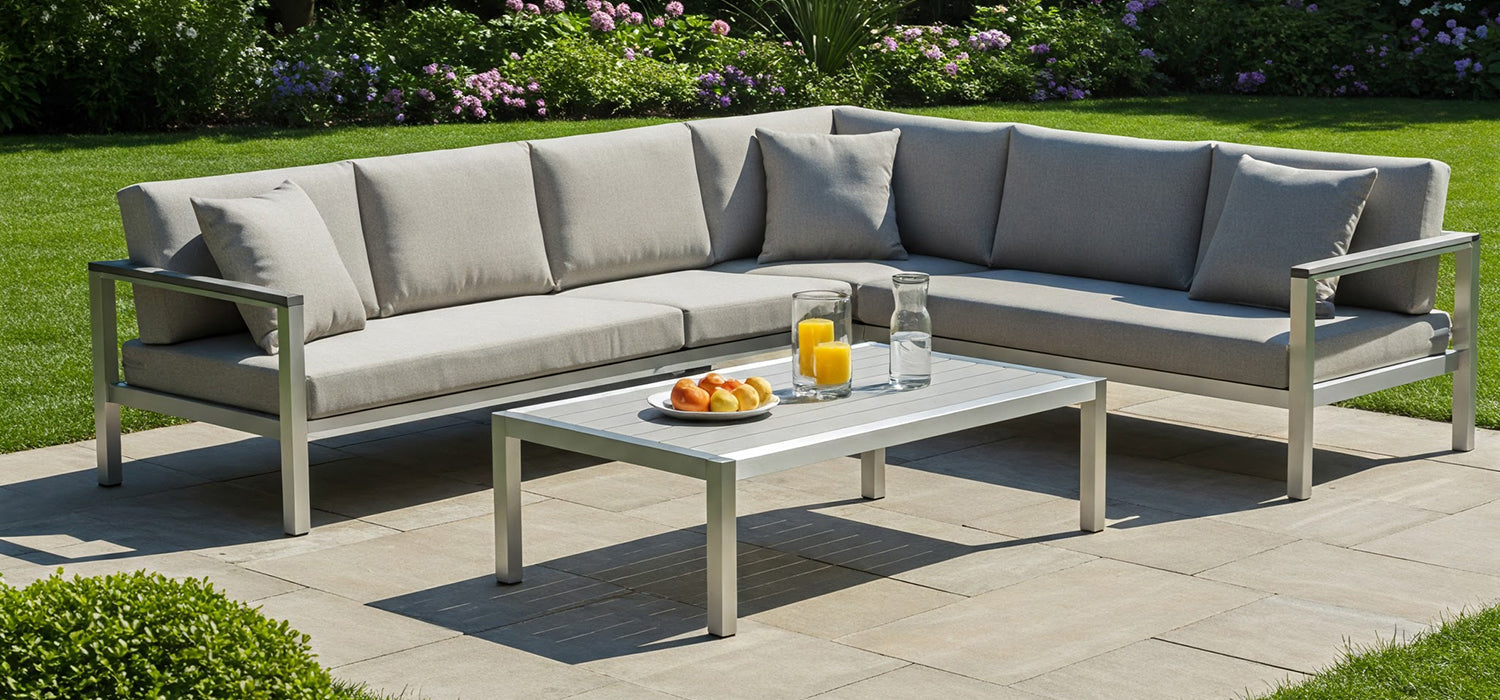
When it comes to outdoor furniture, aluminium takes the crown! Why? It’s lightweight, weather-resistant, and low-maintenance—perfect for those unpredictable UK showers. But what about rattan or wood, especially if you’re eyeing a cosy corner sofa? Read on to find out which material truly reigns supreme!
Choosing the right material for your garden furniture can feel like a bit of a maze. After all, you want something that looks great, stands up to the elements, and doesn’t demand too much attention. With our unpredictable British weather, finding that perfect balance becomes even more crucial. In this article, we’ll break down the key features of aluminium, rattan, and wood so you can decide which one fits best in your outdoor space.
Aluminium has become a favourite for outdoor furniture, and for good reason. First off, it’s lightweight, which makes moving your garden chairs or table around a breeze. You don’t have to worry about lugging around heavy items when it’s time for a change of scene. Plus, aluminium is naturally rust-resistant, making it perfect for the unpredictable British rain.
Another bonus? It’s virtually maintenance-free. A quick wipe-down with some soap and water is all it needs to stay looking fresh. If you're the type who prefers enjoying your garden without spending hours scrubbing furniture, aluminium will save you plenty of time.
Of course, no material is perfect. Aluminium, while great in many ways, can get scorching hot when exposed to direct sunlight. Imagine trying to sit down on your garden chair during a summer heatwave—ouch! You might find yourself reaching for cushions to make your seating more comfortable.
Also, aluminium’s lightweight nature means it’s not the most stable option on windy days. While it’s easy to move around, it’s also prone to shifting or even blowing away if the wind picks up.
Rattan furniture is the ultimate in laid-back, tropical charm. If you’re aiming for a natural, earthy vibe in your garden, rattan’s woven texture is hard to beat. It adds warmth and personality to any outdoor space, turning even the simplest garden into a cosy retreat. Whether you’re hosting a BBQ or just relaxing with a book, rattan brings a certain elegance to your outdoor furniture.
While rattan looks fantastic, it comes with a few caveats. The natural variety is not the most weather-resistant material out there. Over time, rain, sun, and humidity can cause rattan to degrade, crack, or fade. You’ll need to invest in protective covers or bring your furniture inside when the weather turns bad, which can be a hassle.
Another downside is the price. Natural rattan furniture often comes with a hefty price tag, especially if you're after high-quality pieces. It’s worth considering whether the style and aesthetic are worth the extra investment.
If you like the look of rattan but need something that can stand up to the elements, synthetic rattan is your best bet. This resin-based alternative mimics the natural woven look, but with added durability. Synthetic rattan is far more weather-resistant, so it won’t crack, fade, or rot like its natural counterpart. Whether it’s hot, rainy, or frosty, synthetic rattan will look great in your garden year-round.
Plus, it comes in a range of styles, so you’re sure to find something that suits your outdoor space. Whether you're after a modern, sleek design or something more traditional, synthetic rattan has you covered.
The only real downside to synthetic rattan is that it can lack the natural charm of the real thing. While it still looks fantastic, it might not have the same organic texture. Additionally, the quality can vary from one brand to another, so you’ll need to be careful when shopping around. Cheaper options might not hold up as well over time, so make sure to do your research.
If you’re after something that screams timeless elegance, wooden furniture is the way to go. It has an undeniable charm and adds a rustic, classic feel to your garden. Teak, in particular, is known for its durability. It’s naturally resistant to the elements, making it a great option for outdoor furniture that will last.
Over time, wood develops a beautiful patina that adds character. It’s the kind of look that only gets better with age—imagine a wooden table that has been weathered by the seasons, telling a story of your garden's journey.
However, wood does come with its own set of responsibilities. Unlike aluminium or synthetic rattan, wood requires more TLC. You’ll need to regularly seal, oil, or stain your furniture to protect it from the elements. Without this maintenance, wood can crack, split, or become susceptible to moisture and pests, which means more effort to keep it in tip-top shape.
So, how do you decide which material is best for you? The answer lies in understanding your needs, your style, and how much time you want to spend maintaining your furniture.
If you’re after low-maintenance, long-lasting furniture that can handle the unpredictable British weather, aluminium is your friend. It’s lightweight, rust-resistant, and doesn’t require much attention, making it perfect for busy people.
On the other hand, if you love the look of rattan and don’t mind giving it some extra care, it could be just the thing to add a touch of elegance to your garden. Synthetic rattan is an even better choice if you want something that can handle the elements without the worry of fading or damage.
And then there’s wood—classic, durable, but demanding. If you’re willing to put in the effort, wood can provide a stunning, timeless look that other materials can’t quite match. Just make sure you’re ready to roll up your sleeves and keep it maintained.
Ultimately, whether you go for aluminium, rattan, or wood, each material offers its own unique set of benefits. Consider what works best for your garden, your budget, and how much time you’re willing to dedicate to upkeep. With the right choice, you’ll have outdoor furniture that not only looks great but also lasts for years to come.
Other articles our customers have found useful:

