

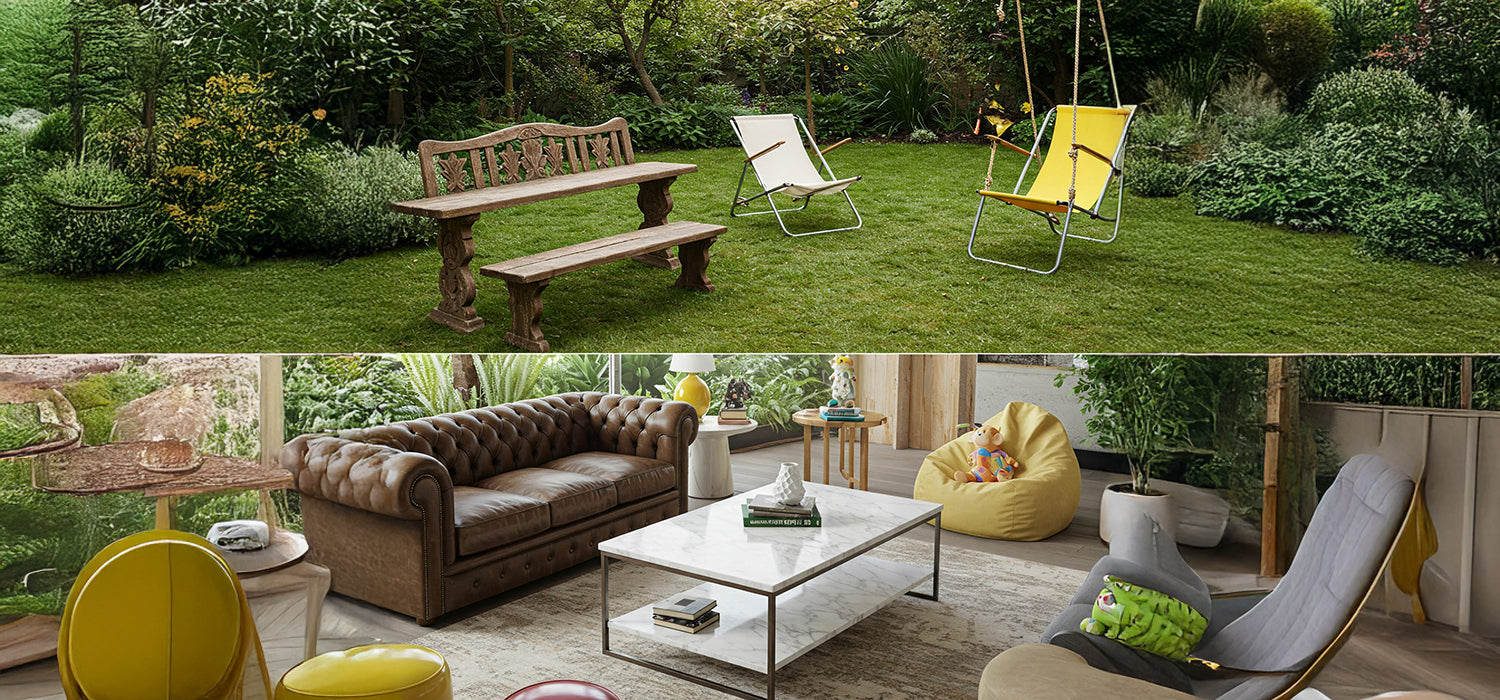
Ever tried leaving your corner sofa in the rain? Spoiler: it won’t thank you. The short answer? Outdoor furniture laughs at the weather; indoor furniture lounges in style. Keep reading to discover which materials survive British downpours, boost comfort, and help you blur the lines between garden and living room bliss.
When it comes to furnishing your home, there’s one clear truth: outdoor and indoor furniture are built for different worlds. While both types serve to enhance comfort and style, their materials, design, and maintenance needs couldn’t be more different. Understanding the ins and outs of each can make a world of difference when choosing furniture for your space, whether it’s a cosy living room or an inviting garden patio.
Let’s face it—outdoor furniture needs to be tough. It’s got to brave everything from rain to heatwaves and still come out looking good. This is why materials like teak, recycled plastic, and synthetic wicker are so popular for outdoor furniture. They’ve got a serious endurance streak, standing up to the elements and remaining resilient through whatever the British weather throws at them.
Imagine leaving your outdoor furniture exposed to the elements all year round. If it’s made from quality materials like teak, it’ll stay intact, avoiding damage from moisture and sun. Teak’s natural oils keep it looking fresh, even after months of rain.
Indoor furniture, however, is all about luxury and comfort. Think of that soft velvet corner sofa where you sink in after a long day—pure bliss. While outdoor furniture focuses on durability, indoor pieces are designed to offer that perfect balance of comfort and style. They use materials like solid wood, plush fabrics, and high-quality metals to enhance your indoor space’s feel and aesthetic.
For example, a plush sofa in your living room is made to cradle you after a long day, not to withstand torrential rain. It's built to look elegant and provide maximum comfort, whether you're binge-watching Netflix or hosting a dinner party.
If you’ve ever left a piece of outdoor furniture in the sun for too long, you’ll know that it can fade or crack. That’s where UV resistance comes into play. Outdoor furniture materials are designed to withstand the damaging effects of the sun’s rays, ensuring that your garden chairs and tables keep their colour and structure intact. Materials like outdoor wicker and recycled plastic are treated with UV-resistant coatings, meaning you won’t have to worry about your furniture looking worn-out after a summer heatwave.
Take synthetic wicker, for example. It’s crafted to be not only stylish but UV-resistant, meaning it’ll keep its vibrant colour and sturdy form without fading away over time.
Let’s not forget the British weather—rain is practically a given. Outdoor furniture must be able to handle moisture without warping, rusting, or going mouldy. Materials like teak naturally resist moisture, meaning they won’t absorb water and swell. Synthetic options like resin wicker are waterproof, ensuring that your garden furniture remains in top condition, even after a heavy downpour.
Picture it: you’ve just finished a rainy afternoon in the garden, and your furniture is perfectly dry, ready for use again. It’s this kind of moisture resistance that makes outdoor furniture a worthwhile investment in the unpredictable British climate.
Outdoor furniture needs to strike a balance between style and practicality. You don’t want your outdoor space to be crowded with bulky pieces, so many outdoor furniture options are designed to be compact and functional. Stackable chairs, foldable tables, and modular seating are all designed to maximise space while still looking stylish. These pieces are perfect for gardens and patios where space might be limited, but you still want a functional and attractive seating area.
Let’s say you’ve got a small patio. Opting for foldable furniture allows you to enjoy outdoor meals without overwhelming the space, and when the weather turns, you can store it away with ease.
Indoor furniture has the freedom to focus purely on style. Whether it’s a sleek coffee table, an elegant corner sofa, or a statement armchair, the design possibilities are endless. The sky’s the limit when it comes to indoor furniture’s form, and because it’s not exposed to the elements, you’re free to choose based on what fits your personal taste and the look of your home. From minimalist to opulent, the choice is yours.
For example, a statement corner sofa can be the centrepiece of your living room, bringing both comfort and style into your space. You wouldn’t want to leave that beauty outside—it's all about creating an environment that feels like home.
When it comes to maintenance, outdoor furniture has a definite advantage. Materials like recycled plastic, synthetic wicker, and teak are designed to be easy to clean and maintain. A quick wipe-down with a cloth is often all it takes to keep things looking fresh. Some pieces might need a little oiling (hello, teak!) to maintain their appearance, but generally, outdoor furniture is pretty low-maintenance. This is especially important if you don’t want to spend your weekends cleaning furniture.
Take recycled plastic furniture, for example—it’s easy to hose off or wipe clean, making it perfect for those busy summer weekends when you’d rather be lounging than scrubbing.
Indoor furniture, on the other hand, can require more attention. Fabrics like velvet, cotton, and leather need regular cleaning to keep them looking their best. You’ll often find that indoor pieces need special care, like professional upholstery cleaning or the occasional polish for wooden furniture. While indoor furniture can be more aesthetically flexible, it also demands a little more love and attention to keep it pristine.
For example, that luxurious velvet sofa you adore might need a deep clean now and then, especially if it’s regularly used. It’s about balancing beauty with upkeep, ensuring that your home remains inviting without becoming a maintenance nightmare.
Choosing between outdoor and indoor furniture isn’t just about picking something that looks good—it’s about making sure the piece fits its environment. Outdoor furniture is built to endure the elements, with durable, weather-resistant materials that ensure it stands up to everything from sun to rain. Indoor furniture, however, is designed for comfort and style, often using materials that need a bit more care but offer a greater focus on luxury and aesthetics.
When you’re shopping for either, keep in mind the needs of the space. For outdoor areas like gardens, patios, and balconies, opt for durable, weatherproof materials. For your indoor spaces, comfort and style should be the top priority. In the end, it’s about finding the perfect balance to create spaces that feel like home, both inside and out.
Other articles our customers have found useful:

