

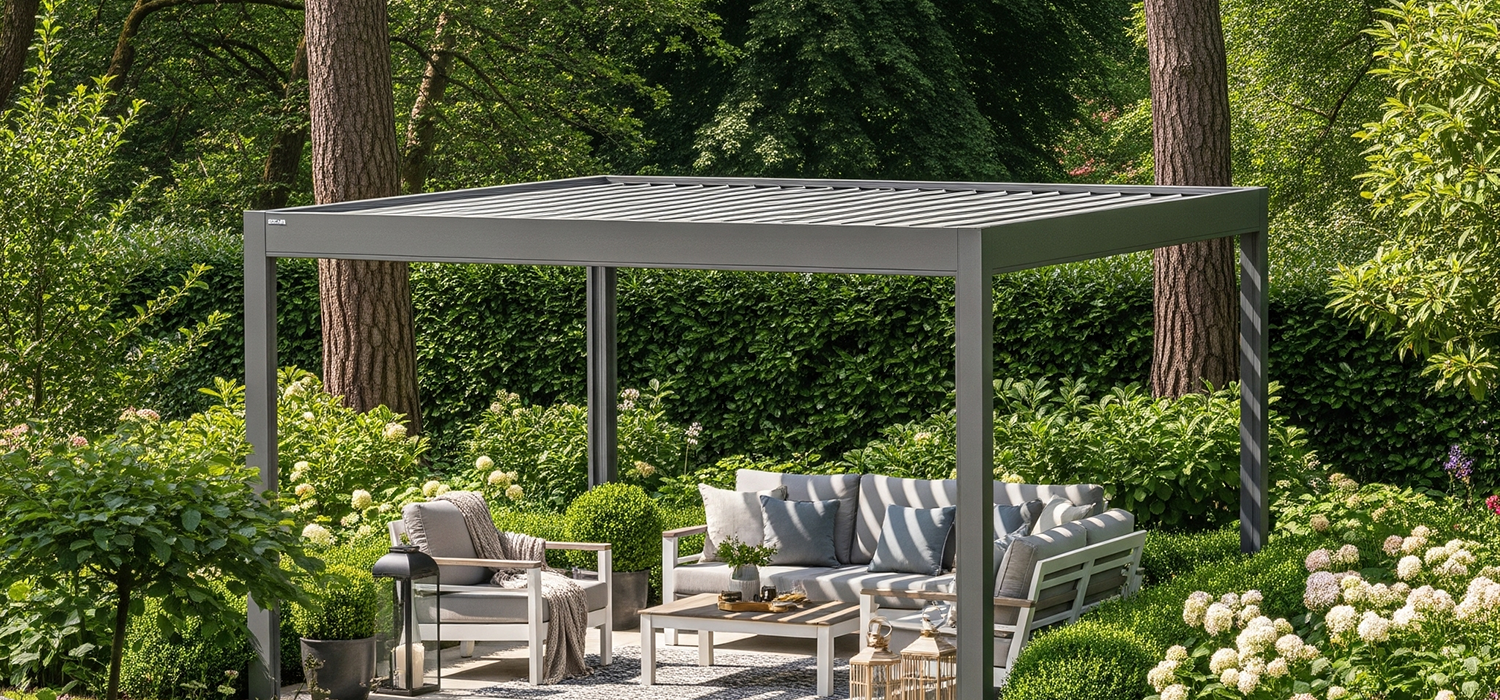
Thinking of popping up an aluminium pergola for those garden soirées? Hold your drill! The short answer: you might need planning permission. From height limits to boundary rules, we’ll walk you through what’s allowed—so you don’t end up tearing it down after tea. Keep reading to build smart!
Aluminium pergolas are a dream addition for garden lovers. They bring structure, shade, and that 'magazine-cover' vibe to any outdoor space. But before you roll up your sleeves and grab a spanner, let’s talk rules.
In most cases, you don’t need planning permission. That’s thanks to something called permitted development rights. But—and this is a big but—there are conditions.
You’re usually in the clear if:
The pergola isn’t in front of your house (facing the street)
It’s under 2.5m tall if within 2m of a boundary
It’s freestanding (not attached to your home)
Your property isn’t in a conservation area, a listed building, or a national park
If you’re unsure, a quick call to your local council can save you a world of hassle.
You’ll need official approval when:
The pergola is over 2.5m high near a boundary, or over 3m elsewhere
It’s located at the front of your house or faces a highway
It’s attached to a building (like your house)
You live in a conservation area or own a listed property
Here’s the gist: height matters. A freestanding pergola can go up to 3m high—as long as it’s not near the fence. If it’s closer than 2m to your boundary, you’ve got to stick to 2.5m or less.
Attached pergolas? These can be classed as extensions and may need planning permission depending on how they’re fixed.
Pergolas near public footpaths or close to a neighbour’s fence need extra care. Besides the height rules, it’s best to avoid placing them right on a boundary. You don’t want to spark a garden feud.
Top tip: A 2-metre gap from your boundary keeps things simple.
Slatted roofs? Lovely. These often slide under the radar as ‘non-permanent’ garden structures. Solid roofs? Not so much.
A pergola with a fixed or waterproof roof might count as an outbuilding or even an extension. That means more rules and possible permissions.
Got a raised deck? Planning rules treat it differently. If your pergola is sitting on a platform over 30cm high, that height gets added to your total structure height.
Same goes for sloping gardens—measure from the highest ground point.
UK homeowners can start with the Planning Portal, but don’t stop there. Your local council may have extra guidelines—especially in sensitive zones.
In Australia? Rules can vary dramatically by state. What flies in Queensland might not cut it in Victoria. Always check your local planning authority.
Need permission? No need to panic. You’ll typically need:
A site plan
Drawings or sketches of your proposed pergola
Details about height, materials, and location
Most decisions come back within eight weeks, but listed buildings or protected areas may take longer.
Skip permission when you need it, and you could face serious issues. We’re talking enforcement notices, fines, or even being told to remove your brand-new pergola.
Don’t risk it—check first, build second.
Installing a pergola over a patio is a classic move. It adds definition and turns a plain slab into an alfresco masterpiece. Just keep platform height in mind!
Want to make your garden feel bigger? Use your pergola to create zones. Dining corner here, reading nook there—it’s like building rooms without walls.
Rear gardens are usually your best bet. Front gardens often face tighter restrictions, especially if they border a public road. Always double-check before committing to a location.
No one wants to sit in the shadow of a neighbour’s towering pergola. Be mindful of how your structure might block light—or views.
Open designs, careful positioning, and clever planting can make everyone happy.
It’s not a legal requirement, but having a chat with your neighbour before building close to the boundary is always wise. It builds goodwill—and can smooth the way if issues crop up later.
Want shade at lunch but sun in the morning? Map out your sun path. There are free apps that can help you plan the perfect position.
Match the style of your pergola to your home’s look. Aluminium pergolas are modern and sleek—ideal for contemporary homes.
Aluminium, timber, steel—each has its vibe. Timber brings warmth, aluminium gives a clean finish, and both can blend beautifully if styled right.
Many homeowners get tripped up here. Make sure you understand where to measure from and how your pergola’s height interacts with boundary lines.
Even a simple pergola might need special permission in a conservation area or listed property. If in doubt—ask your council planning team.
Raised patio? Sloping garden? Your pergola’s ‘true’ height may be higher than you think. Measure carefully to stay within the limits.
If your project’s a bit more complex—or you’re in a sensitive area—chatting to a planning consultant is money well spent. They can help with drawings, paperwork, and advice.
Pre-application advice from the council can flag problems before they start. It’s informal, affordable, and can save you from rejected applications.
Done right, a pergola is more than just garden décor. It’s your own slice of shade and style—built to last, and built to comply.
Other articles our customers have found useful:

