

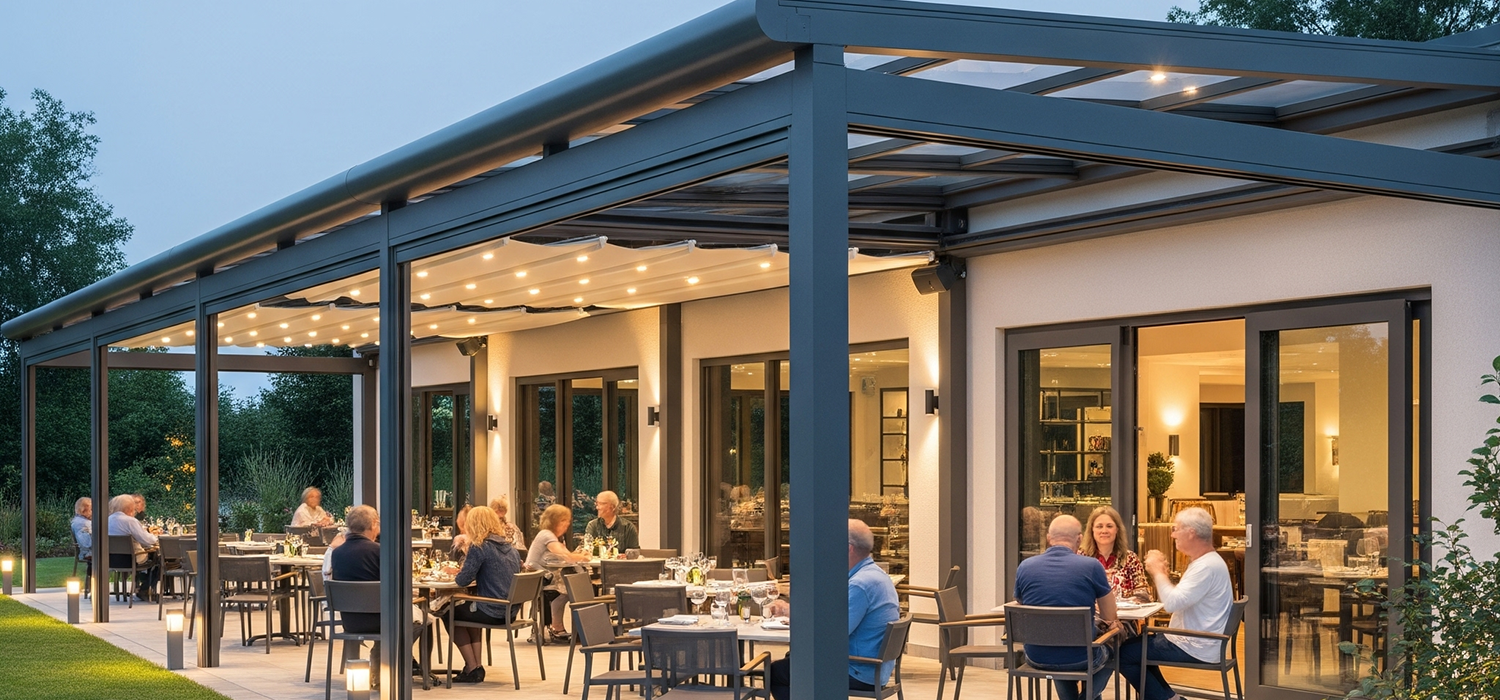
Can a pergola increase restaurant capacity?
Absolutely — especially with a sleek aluminium pergola that turns “just a patio” into premium seating. From sheltering guests to boosting bookings, it’s your secret weapon for more covers and cooler vibes. Curious how? Keep reading to see the profits pile up with style.
Adding a pergola isn’t just a nice design feature — it’s a smart business move. Whether you're a pub garden in Devon or a city centre bistro in Leeds, turning underused outdoor space into a buzzing dining zone could change the game.
Pergolas, particularly aluminium ones, offer a stylish and practical solution for expanding capacity without the hassle of bricks, mortar, and planning headaches.
Let’s be honest — we all know that scrappy patch at the back. Maybe it’s been used to store bins or as an unofficial staff smoking area. But with the right pergola? It becomes a money-making corner of your restaurant.
Pergolas create structure, shade, and shelter — making that once-forgotten space not only usable but desirable.
Your dining room might be full, but your growth doesn’t have to stop there. Pergolas offer a way to push your boundaries — literally. You can add tables, zones, and extra covers, without the cost or time of a full-blown extension.
It’s expansion on your terms — and it’s surprisingly quick to implement.
Whether it’s cosy corners for couples or longer tables for lively groups, pergolas help define different areas with ease. One week, it’s set for brunch; the next, it’s an evening wine tasting.
Having that flexible structure lets you respond to bookings, events, and even the weather — without constantly rearranging your entire setup.
We live in the UK — let’s not pretend the weather’s always on our side. But with heaters, retractable roofs, and side panels, an aluminium pergola makes outdoor dining work all year round.
That means more sittings, fewer cancellations, and guests staying longer into the evening. What used to be a summer-only setup becomes a permanent, revenue-generating feature.
People eat with their eyes. If your outdoor space looks inviting, people are far more likely to stop, book, or pop in for a drink that turns into dinner.
A well-dressed pergola, strung with fairy lights or framed by planters, adds charm and curb appeal. It's not just a space — it’s an experience. And experiences bring customers back.
Want to host a birthday brunch? A wine tasting? An intimate wedding dinner? Pergolas give restaurants a semi-private, atmospheric space perfect for events.
This opens a new stream of bookings — and let's face it, private events often mean higher spends and pre-orders. A pergola makes it easier to say “yes” to the extra business.
Rain happens. But it doesn’t need to ruin your fully-booked Friday night. A covered outdoor area helps reduce weather-related no-shows and gives guests confidence when booking ahead.
It also allows you to plan your staffing and prep more accurately — because fewer last-minute changes mean smoother operations.
Not every pergola needs to be a palace. Even a 4m x 6m aluminium pergola can seat 12–16 guests comfortably. The design matters too — louvred roofs, open sides, or fully enclosed with retractable elements all play a part.
It's about choosing what suits your space and service style best.
In most cases, especially in commercial settings, it’s wise to check in with the local council before you go ahead. Rules can vary depending on conservation areas, noise levels, and the structure's footprint.
The good news? Aluminium pergolas often fall into more flexible categories than permanent extensions — just make sure to do your homework.
Blankets and patio heaters are nice touches, but investing in integrated features — like retractable roofs, LED lighting, or infrared heating — creates comfort your guests will remember.
It also means they’re more likely to stay longer, order more, and come back again.
Don't forget the practical side: Can servers easily reach the new tables? Is there shelter for food waiting to be delivered outside?
Integrating your pergola with existing service routes and kitchen flow helps maintain (or even improve) efficiency.
Start by standing in your outdoor area and asking: Is this space working for me, or could it work harder? Is it empty half the year? Could it host four, six, even ten extra tables?
Every underused square metre is a missed opportunity.
Let’s crunch a quick example: Add 16 seats under a pergola. If each seat brings in £20 per sitting and you run two sittings a night, that’s £640 extra per day. Over a month? That’s nearly £20k — from space you already own.
And that’s not including event bookings or added drinks sales from a more attractive setting.
Compared to building works or extensions, pergolas are faster to install, less disruptive, and often don’t need full planning approval. Aluminium pergolas, in particular, are low-maintenance and long-lasting — giving you more return over time.
They’re a smart, sustainable solution that scales with your business.
Your pergola should feel like a natural extension of your dining space — not a bolt-on afterthought. Ideally, it connects directly with your indoor seating or bar area, minimising movement issues and keeping the team flowing smoothly.
Avoid crowding. Choose flexible furniture that can shift between two-tops and larger group arrangements. Built-in seating or storage benches also help maximise room without cluttering walkways.
If the pergola’s doubling your covers, your team needs to keep up. That might mean adding an extra runner, a dedicated outdoor server, or a service station closer to the tables.
Staff training and logistics are key — after all, great service keeps guests coming back, no matter where they’re seated.
Other articles our customers have found useful:

