

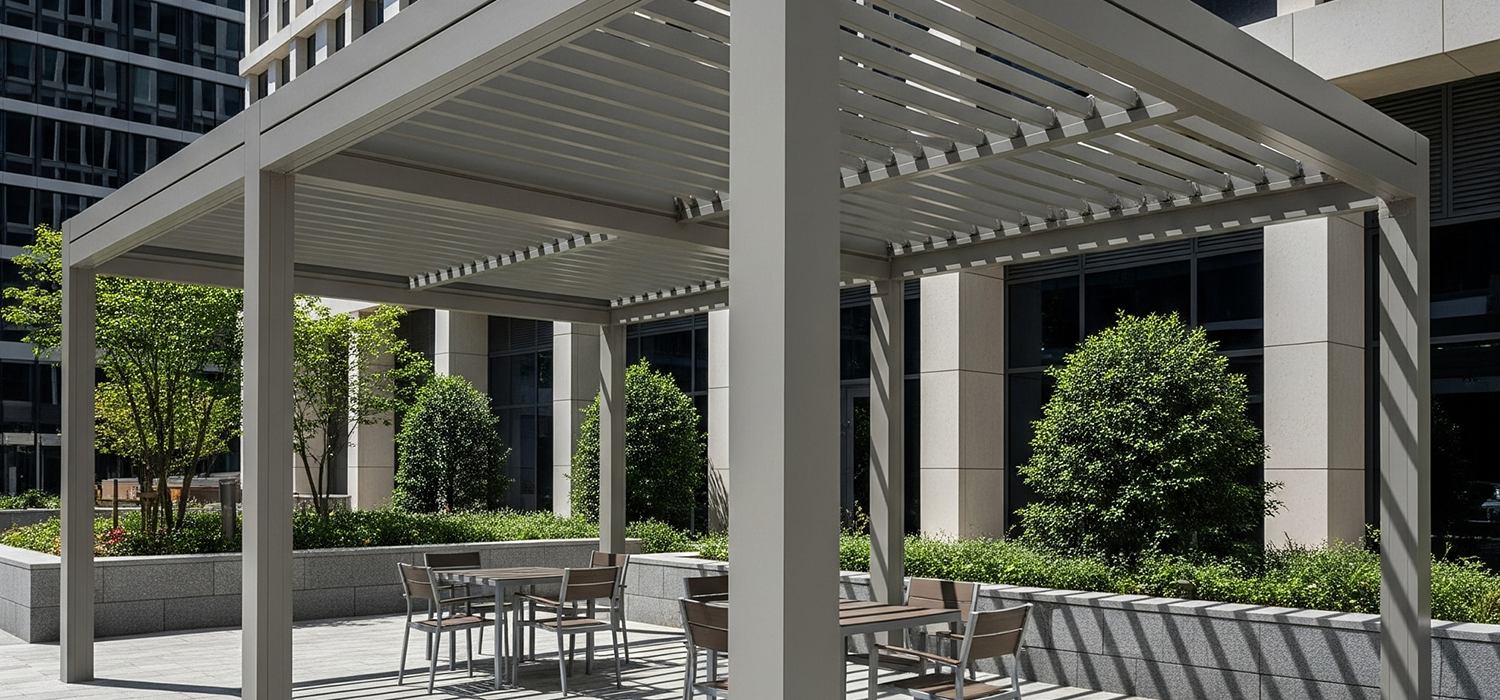
Want a pergola that won’t go up in smoke—literally? 🌞🔥 The short answer: choose an aluminium pergola made with fire-rated materials and proper certifications. It’s sleek, safe, and regulation-ready. Keep reading to find out which standards matter, what to ask suppliers, and how to fireproof your outdoor business space with flair.
A good-looking pergola might turn heads, but fire safety is what truly matters when lives and livelihoods are at stake.
Whether you run a café, a pub, or an outdoor showroom, fire risks are real. A stray cigarette, an electric fault, or a freak heatwave could turn your investment into ashes. That’s why choosing fire-smart designs and materials isn’t optional—it’s essential.
Let’s face it: no one wants a visit from the fire marshal followed by a hefty fine. Regulations exist for a reason, and skipping them could mean forced closures, insurance nightmares, or worse.
By making smart, compliant choices from the start, you’re protecting your customers, your team, and your bottom line.
Most local authorities base their fire safety rules on the International Building Code (IBC), with tweaks to suit regional quirks.
These codes dictate things like structure spacing, allowable materials, and construction methods. It’s wise to check in early with your local planning office to know what applies to you.
NFPA 1 and 101 provide the gold standard in fire codes, covering everything from prevention to emergency escape routes.
Don’t overlook local interpretations—what passes in Manchester might not fly in Milton Keynes. Always double-check with your fire marshal.
Let’s simplify the jargon:
Flame Spread: How quickly a fire moves across a surface.
Smoke Developed: How much smoke the material gives off.
Ignition Resistance: How easily it catches fire in the first place.
Together, these decide whether a material is friend or foe in a fire.
A pergola for a beer garden isn’t the same as one outside a nursery.
Different uses fall under different occupancy classes, which affect safety rules. Check if your space is classed as assembly, educational, retail, or something else—then build accordingly.
Aluminium is the poster child for fire safety. It doesn’t ignite, won’t melt under mild heat, and looks sharp in any commercial setting.
Steel is just as fire-tough but can warp under extreme temperatures. It's heavy-duty, industrial, and perfect for modern spaces.
These are usually used in the base or posts. While not common for full pergola frames, they offer unbeatable resistance.
Love the look of timber? You can still keep things safe with fire-retardant treatments.
This type of wood slows ignition and reduces flame spread. Ideal for rustic charm with peace of mind.
If a supplier can't show you test results like ASTM E84, walk away. Certifications show the product’s been tested, not just talked up.
Great for letting in light but be choosy. Only use panels rated Class A or B, depending on your area’s fire risk.
That shade sail or retractable canopy? It needs a flame-retardant label. No exceptions, especially for public spaces.
Here’s the quick guide:
Class A: Maximum protection
Class B: Moderate resistance
Class C: Basic compliance
If you can afford it, aim for Class A.
Keep a safe distance between your pergola and nearby buildings, fences, or hedges. Fire jumps fast.
If your pergola is close to windows or doors, you might need fire-rated glass or shutters. Better safe than scorched.
People need to get out fast in an emergency.
Don’t block pathways or exits with furniture, plants, or storage boxes. Clear routes save lives.
Open sides or louvred roofs let smoke escape.
If your pergola is semi-enclosed, this feature is crucial to avoid smoke build-up in a fire.
Plug-and-play setups won’t cut it.
Hire a certified electrician for lighting, heaters, or fans. Poor wiring is a top fire culprit.
Talk to them early. They’re not there to make your life hard—they’re there to make sure no one gets hurt.
Be ready to submit detailed plans and proof of fire-rated materials.
This is how you earn approval and avoid costly do-overs.
Before you build, your plans will be reviewed. After you build, your pergola will be checked.
Both are vital steps, so don’t skip them.
Ask to see the test reports. A reputable supplier will have them ready.
No data? No deal.
Not all pergolas are created equal. Make sure yours meets UK regulations—especially if it’s being sold as "fire-safe."
If the worst happens, who’s responsible?
Check the fine print for coverage on fire-related incidents. Understand what’s covered and what’s not.
Dead leaves and dirt are fire fuel.
A quick sweep once a week could make all the difference.
Seasonal checks keep systems safe. Faulty wiring or overheating heaters are major hazards.
Even after you build, don’t let clutter creep in.
Exit paths should always be clear, especially if you change your layout.
From your choice of materials to your final inspection, fire safety must lead the way.
It’s not just a rulebook—it’s a responsibility.
Choosing a fire-safe pergola is one of the smartest decisions you’ll make.
You’ll sleep better, your customers will stay safer, and your business will thrive.
Let style and safety work together—because when it comes to fire, there are no second chances.
Other articles our customers have found useful:

