

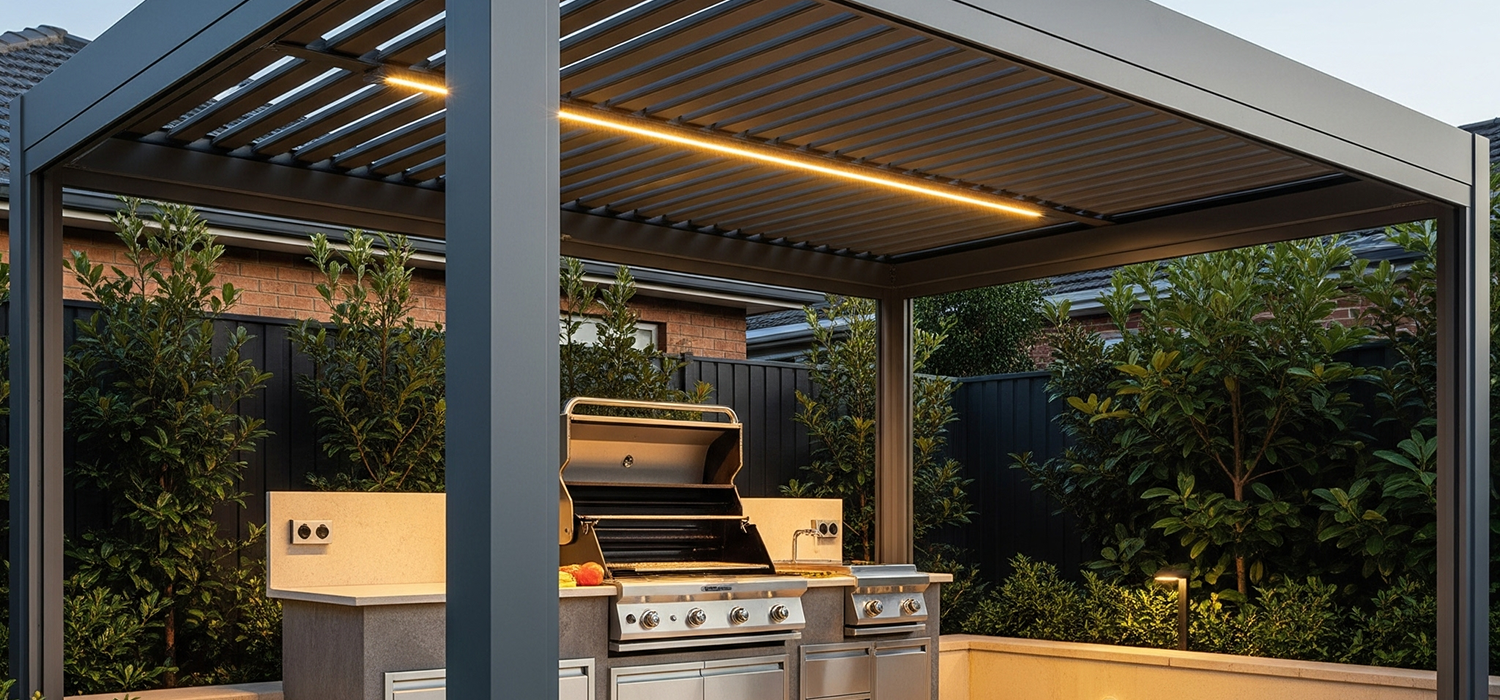
Thinking of flipping burgers while shaded under your aluminium pergola? The short answer is yes—you can barbecue under a pergola, especially aluminium ones—but there’s a sizzling list of safety rules to follow. From fire hazards to smoke traps, grilling under cover calls for smart setup. Here’s how to get it right without roasting your rafters.
The classic British barbecue is often a game of weather roulette.
You set the table, light the grill—and then the skies open. A pergola feels like a dream solution. It adds shade, a touch of elegance, and most importantly, shelter when the heavens inevitably decide to join the party.
So it’s no wonder many are tempted to roll the BBQ underneath and carry on sizzling. But there’s more to it than just staying dry.
A pergola isn’t just a pretty frame—it’s a structure, often made from materials that don’t love open flames.
From the moment you strike a match, you're dealing with heat, smoke, and grease. These elements can easily damage your pergola or worse—cause a fire. Being aware of the risks is the first step to grilling with confidence.
Every pergola is different, and the material it’s made from plays a big role in how safely you can grill underneath.
Wood looks beautiful, but it doesn’t handle heat well.
A stray spark from your charcoal BBQ or a sudden flare-up could leave more than just scorch marks. If you’re using a wooden pergola, you’ll need added fire protection—think heat shields and generous clearance.
Aluminium pergolas are a better choice for BBQ setups.
They don’t catch fire easily, and they handle heat better than timber. Still, be cautious. Extended exposure to heat can discolour the frame, and nearby decorative elements like string lights or curtains can still pose a risk.
Let’s be blunt—fabric and fire do not mix.
If your pergola has flowing curtains or a canvas roof, keep the BBQ well away. Even heat radiating upward can be enough to start a fire. Roll back or remove any fabric elements before you light up.
Charcoal and gas grills produce carbon monoxide—an invisible, odourless gas that can be deadly in enclosed or poorly ventilated spaces.
Even though a pergola isn’t technically enclosed, it can still trap fumes if it has limited airflow. That’s why positioning and design matter.
Grilling under cover works best when air can move freely.
Choose pergolas with open sides or roofs that open up, like louvred aluminium models. These allow smoke to escape, keeping the air clean and reducing that smoke-in-the-eyes barbecue effect.
Heat doesn't just rise—it lingers.
If your BBQ is too close to the roof or support beams, the heat could cause discolouration or even warping over time. Metal may tolerate flames better than wood, but it's not immune to long-term wear.
This one’s simple: distance is your best friend.
Make sure your barbecue is set back from posts, beams, and any overhead elements. As a rule of thumb, allow at least 60 cm (2 feet) of clearance for gas grills and even more for charcoal.
Don’t even think about putting a BBQ directly on decking or artificial grass.
Use a fireproof base—stone, concrete, or heat-resistant tiles work brilliantly. This stops heat damage and reduces fire risk if something drops or spills.
The more open your pergola, the better the airflow.
Louvred roofs are ideal—they let you adjust how much cover you have while still allowing smoke and heat to escape. Open-sided designs work best to keep things breezy.
Enclosed pergolas or those with glass panels trap heat and smoke, turning your BBQ into a chimney-less oven.
Keep at least two, if not all four, sides open to let fresh air in and smoke out.
Charcoal gives unbeatable flavour—but it’s messy, smoky, and unpredictable.
It burns hotter, throws more sparks, and produces more carbon monoxide. If you're using charcoal under a pergola, be extra cautious with placement and ventilation.
Gas grills are cleaner and easier to control, but don’t be fooled—they still have open flames and can flare up without warning.
Keep an eye on gas connections and check for leaks before lighting up.
Electric grills are the safest bet under a pergola. No flame, less smoke—but still hot enough to cause damage if placed carelessly.
Even with electric, clearance and surface still matter.
Whether you’re a casual griller or a weekend pitmaster, always have a fire extinguisher or hose close by. It’s one of those things you’ll never regret having if you need it.
We’ve all wandered off to get the burger buns—but unattended barbecues are the biggest cause of garden fires.
Stay close and stay alert.
Create a buffer zone around your BBQ—no children, no dogs, no distractions.
Set clear boundaries, and make it a rule that little feet and paws stay well clear.
Charcoal stays hot long after the fire's out.
Dispose of ash in a metal bucket and only after it’s fully cooled. Never pour it onto soil or into the bin while warm.
Roof open, grill on.
A retractable roof is your secret weapon—shelter when needed, ventilation when you’re cooking. Aluminium louvres are particularly great as they resist heat and can be easily adjusted.
If you’re going full gourmet with an outdoor kitchen, consider a ceiling fan or extractor.
It helps manage smoke and keeps your pergola fresh and safe during longer cooking sessions.
A stone or tiled floor beneath your barbecue isn’t just smart—it’s essential.
It makes cleaning easier, improves safety, and looks great too.
Barbecuing under a pergola? Absolutely—but don’t wing it.
With smart choices, a bit of planning, and a good safety setup, your pergola can be the heart of your garden grilling zone. Aluminium pergolas, in particular, offer the best of both worlds—shade and safety—making them a top pick for BBQ lovers.
So light up the grill, invite the neighbours, and enjoy your outdoor cooking the right way—without the fire brigade on speed dial.
Other articles our customers have found useful:

