

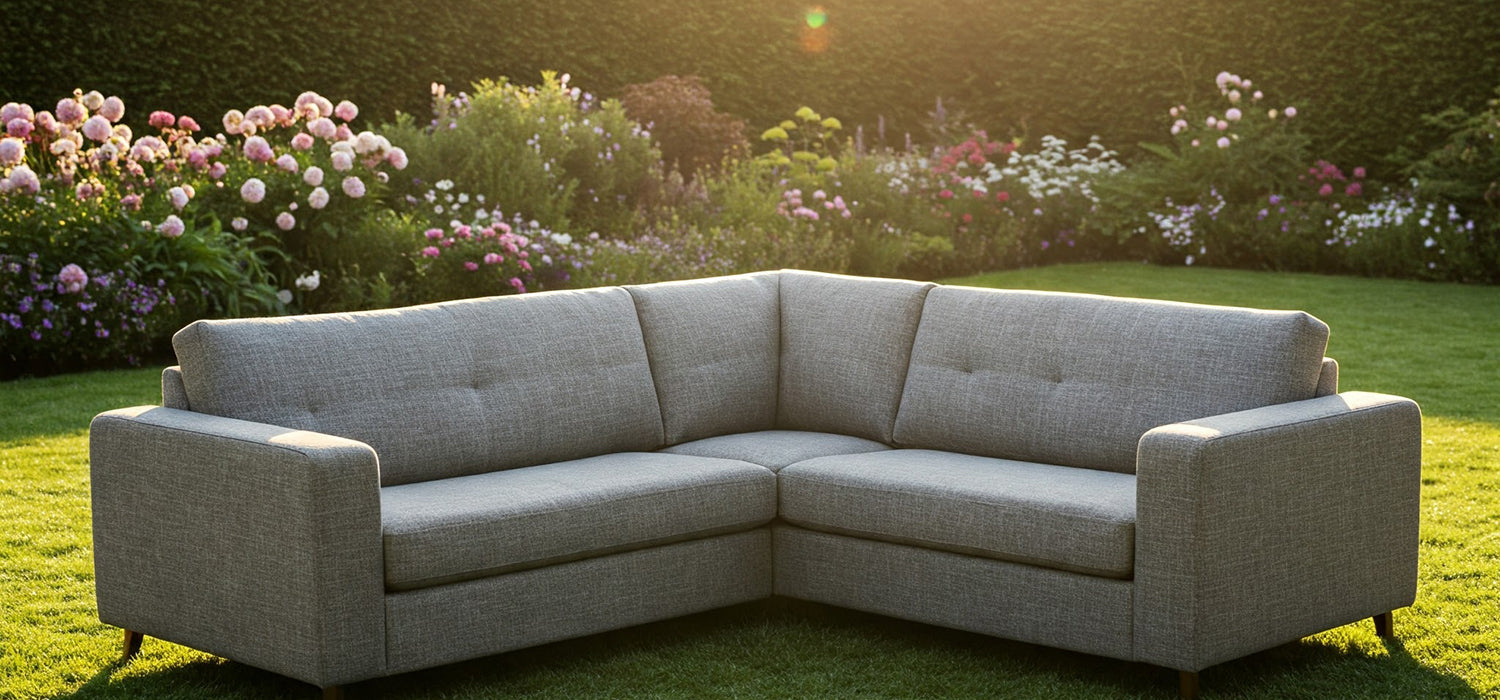
Ever bought a stunning outdoor sofa, only to realise it looks like it’s gate-crashed the wrong party in your garden? Short answer: Match your furniture to your garden’s style, colours, materials and layout for a space that feels “meant to be.” Keep reading for easy, real-life tips (and yes, Outdoor Corner Sofas make an appearance).
Let’s be honest — garden furniture can either make your outdoor space look like an elegant retreat or an awkward patchwork of styles that don’t speak to each other.
The trick is making your furniture feel like it belongs in your garden, not like it’s been plonked there after a last-minute trip to the garden centre.
Whether you dream of sleek modern lines, rustic charm or something in-between, this guide will show you how to pull it all together with ease — and personality.
Before you start hunting for furniture, take a step back and ask: what vibe does my garden already have?
Is it tidy and symmetrical, or is it more relaxed and overflowing with blooms?
Nailing your garden’s style first means you’ll know exactly what sort of furniture won’t stick out like a sore thumb.
A formal garden — think clipped hedges, neat lawns and geometric beds — naturally pairs with structured furniture.
Picture classic wrought iron benches, symmetrical dining sets or sleek teak tables with matching chairs.
If your garden has a looser, more informal feel (like wildflower borders or winding paths), lean into it.
Reclaimed wood benches, relaxed Outdoor Corner Sofas with soft cushions, and rattan lounge sets slot perfectly into these casual spaces.
Imagine sipping tea on a weathered wooden bench surrounded by lavender — bliss.
Cottage gardens practically beg for vintage or antique-look furniture.
Whitewashed wood, floral cushions and cast-iron bistro sets fit like a glove amongst climbing roses and foxgloves.
On the flip side, if your space is sharp and minimal — lots of paving, grasses and clean edges — go for modern metals and monochrome tones.
Aluminium tables, black-framed sofas and sleek coffee tables will blend effortlessly.
It’s a bit like choosing an outfit: floral dresses for the countryside, sharp tailoring for the city.
Next up, think about the textures and colours already in your garden — plants, paving, fencing, the lot.
Your furniture should sit comfortably within this palette, not clash wildly with it.
Wooden furniture is a classic for a reason — it looks right at home surrounded by greenery.
Teak, oak and eucalyptus bring warmth and texture, balancing lush foliage beautifully.
If you’ve got a garden bursting with shrubs, trees and flowers, wooden pieces (like a chunky bench or slatted dining table) will feel like an extension of nature itself.
Plus, wood weathers charmingly over time, adding character.
Got a modern garden with sharp lines and stone or concrete features?
This is where metal furniture shines.
Powder-coated aluminium or stainless steel in charcoal, black or crisp white adds sleekness without feeling too industrial.
A matte black Outdoor Corner Sofa paired with grey paving stones? That’s a recipe for contemporary garden goals.
Style’s important, sure — but so is how you use your garden.
Furniture should invite people in, not block movement or make gatherings awkward.
One of the smartest moves? Dividing your garden into zones.
Pop a dining table on the patio for family BBQs, create a lounge area with an Outdoor Corner Sofa and coffee table for evening drinks, and maybe even tuck a bench into a quiet corner for reading.
It’s the outdoor equivalent of open-plan living — but with a bit more sun and birdsong.
Nobody likes squeezing past oversized furniture to get to the garden gate.
Make sure there’s plenty of space between your zones and pathways.
Leave at least a metre between furniture and walkways so guests aren’t doing awkward sideways shuffles with a plate of burgers.
If you’re tight on space, go for furniture that can be moved easily — folding chairs, stackable stools or a compact corner set.
Finally, it’s the finishing touches that make your garden furniture feel intentional, not accidental.
Scatter cushions, outdoor rugs and throws instantly add warmth and character.
Pick colours and patterns that echo your plants — sage greens, floral prints or bold, modern stripes, depending on your garden’s vibe.
Planters, lanterns and string lights bring it all together, too.
Think of accessories as the jewellery of your garden space — small, but transformative.
With a little planning and a dash of creativity, matching your outdoor furniture to your garden design is less daunting than it sounds.
Remember: style, materials, functionality and those all-important accessories.
Get those right, and your garden won’t just look fantastic — it’ll feel like the perfect place to spend your summer afternoons.
Other articles our customers have found useful:

