

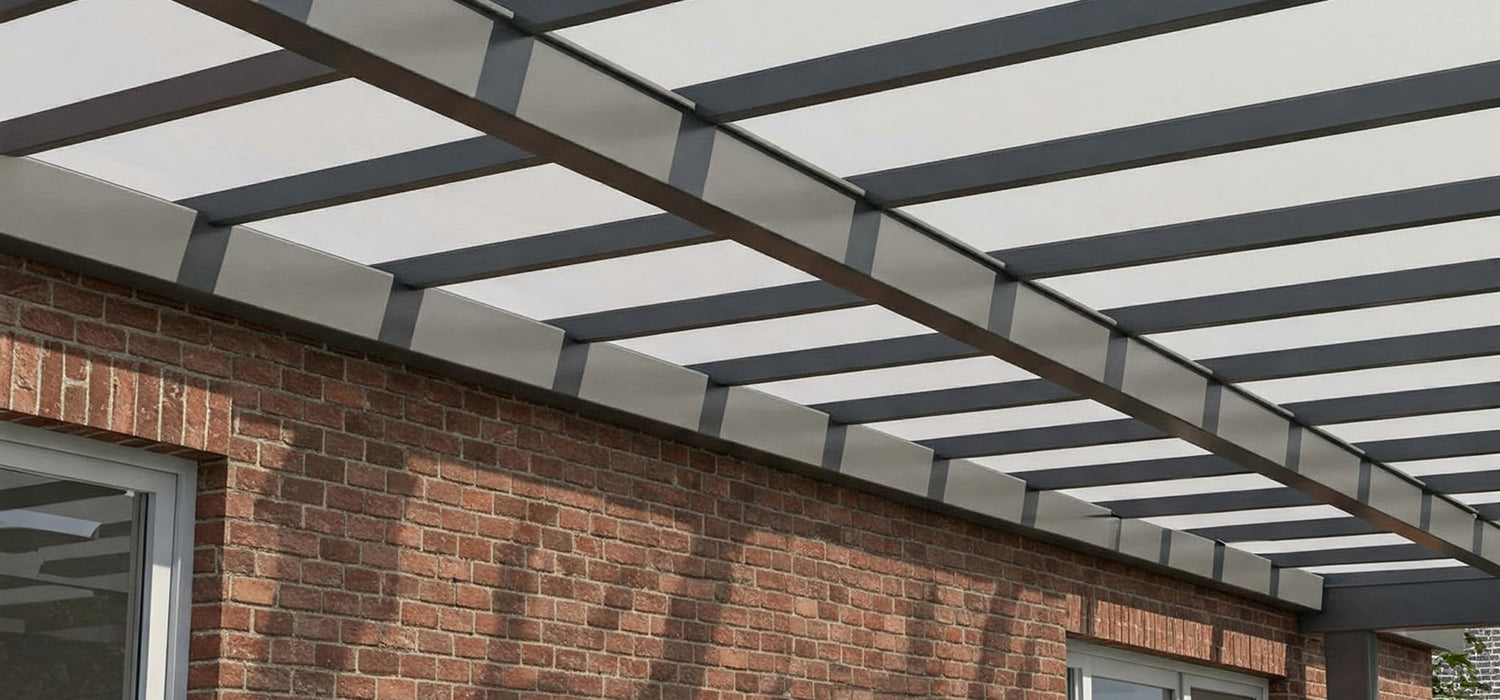
Can you build a pergola onto brick pillars? Absolutely—and it can look brilliant doing it! Whether you're dreaming of sipping wine under an aluminium pergola or just upgrading your patio, this guide covers the how, the wow, and the what-not-to-do. Read on before you grab your drill!
You’ve got a set of brick pillars in the garden, and your Pinterest board is screaming for a pergola. But before you start hauling out the timber and power tools, there’s one big question: can those bricks take the load?
Let’s break down what makes brick a worthy support—and what might send your pergola plans crumbling.
Not all brick pillars are created equal. Some are as solid as a 1950s telephone box; others, more like a stage prop with good lighting. Knowing the difference is everything.
Solid brick pillars are what you want. These are often packed with concrete or have steel reinforcements, making them sturdy enough to carry the weight of a pergola.
Brick veneer, however, is more of a façade. It’s usually a thin skin hiding a timber or steel frame—and that’s where the real anchoring needs to happen.
Think of brick like your favourite leather boots. They may still look the part after years outdoors, but give them a close look—they could be cracked, brittle, or starting to peel.
Old bricks can hold their charm, but they may not hold a pergola. Always inspect before you fix.
Even the best brick pillars won’t last long if they’re sitting on dodgy ground. A sunken base or shifting soil can tilt everything out of line.
Before you build, check that the pillars are level and that their base hasn’t moved over time.

Let’s be honest: British weather doesn’t mess about. Your pergola may look peaceful now, but one solid gust from the west and it could become airborne.
Pergolas catch wind like sails. It’s not just about vertical weight—lateral forces are just as important. Anchor it well, or prepare for a dramatic garden mishap.
Improper anchoring doesn’t just risk your new structure—it can wreck your lovely brickwork, too. Pulling out anchors or cracking mortar isn’t the look anyone’s going for.
Secure fixings mean peace of mind. Whether it’s your Sunday barbecue spot or a reading nook, you want that pergola to be safe, sturdy, and still standing five years from now.
Before you bolt anything down, get familiar with what you’re working with. A bit of detective work now can save a whole load of trouble later.
Grab a torch and a curious eye. Look at the mortar joints—are they deep and consistent? Tap the brick—does it sound hollow?
If the bricks are thin or the layout looks more decorative than structural, you’re probably dealing with veneer.
If you're unsure, check your home’s original plans or bring in a builder. Ten minutes of professional advice could make or break your project (literally).
Spalling is when the face of the brick starts flaking off—think of it like peeling paint on a rusty car. It’s a sign your bricks are in trouble.
Any large cracks or crumbly spots? Time to repair before building.
Mortar holds it all together. If it’s flaking away like dry pastry, your fixings won’t hold either.
Fix what needs fixing. Re-point, replace, or reinforce as necessary. You want a solid surface before any anchor goes in.
Time for the nuts and bolts—literally. Here’s how to attach wood pergola posts securely to brick pillars.
Galvanised steel bases are brilliant. They resist rust, last for years, and keep everything firmly in place. Look for brands like Simpson Strong-Tie or hidden base kits for a clean finish.
Match your anchors to the job. Wedge anchors are a go-to, but sleeve or epoxy types work great on uneven surfaces.
Before installing, make sure the top of the pillar is level. Shim it if needed—your pergola’s balance depends on it.
Use a hammer drill—not a standard drill—and aim for brick, not mortar. It offers a stronger hold and reduces the risk of cracking.
Threaded rods give you serious holding power. Add washers and nuts for a tight, secure clamp.
They spread the load and stop the bolt head pulling into the brick. Skipping this step is a common DIY mistake.
Use exterior sealant to fill any gaps. It keeps rainwater out and stops brick deterioration over time.
Epoxy anchors are ideal when you need heavy-duty hold without stressing the brick. Think of it as superglue for grown-ups.
Perfect for aluminium pergolas or beam ends under load. They offer strength and durability in a neat package.
Follow the kit instructions carefully. Wrong mix = weak hold. Don’t eyeball it—measure and mix like it matters.
If you’re not placing posts on top of the pillars, you’ll be fixing beams directly to the side of the brick.
A ledger board supports the beams along one side, often fixed to a house wall or column face. It reduces the need for upright posts.
Use spacers to allow airflow behind the wood. Add flashing on top to keep moisture out—water trapped behind timber is a recipe for rot.
With veneer, you must anchor to the studs or steel frame behind. Brick alone won’t hold up to the stress.
Framola and similar kits simplify the process. They’re strong, sleek, and purpose-built for attaching timber to masonry.
Want something bespoke? A local metalworker can create clean, architectural brackets tailored to your design.
Some councils treat pergolas like extensions—so check first. You may need to meet wind load or fire safety regulations.
If your pergola is large, raised, or fixed to a house, an engineer’s input might be needed. Don’t worry—it’s not as scary (or pricey) as it sounds.
The British climate doesn’t love untreated steel. Choose corrosion-resistant fixings to prevent rust streaks and structural failure.
Bigger isn’t always better—but it’s often stronger. Match the fastener size to the load it’s carrying, especially in wind-prone areas.
If you're unsure about the brickwork or fixings, bring in a pro. They’ll get it done faster—and it’ll last longer.
You’ll need a hammer drill, masonry bits, goggles, and probably some patience. Masonry isn’t as forgiving as timber.
Seal all drill holes. Water in the wall can freeze, expand, and ruin your brickwork faster than you’d think.
Flashing keeps rain from creeping in, while sealant closes the gaps. Use both—they’re your first defence against long-term damage.
If your fixings don’t bite, it might be hollow behind. In that case, switch to chemical anchors or extend fixings into the structure behind the brick.
Drill slowly, don’t force it, and keep away from edges. A steady hand is your best ally here.
Check and double-check as you go. Even a slight lean can throw off the whole structure and drive you mad every time you look at it.
Yes, you can absolutely attach a pergola to brick pillars—just make sure the bricks are up to the job, the fixings are right, and the method matches your structure.
Done well, a pergola transforms a space. Whether it’s for shade, style, or sipping something cold in summer, a solid, well-fixed pergola adds charm and value to your home.

