

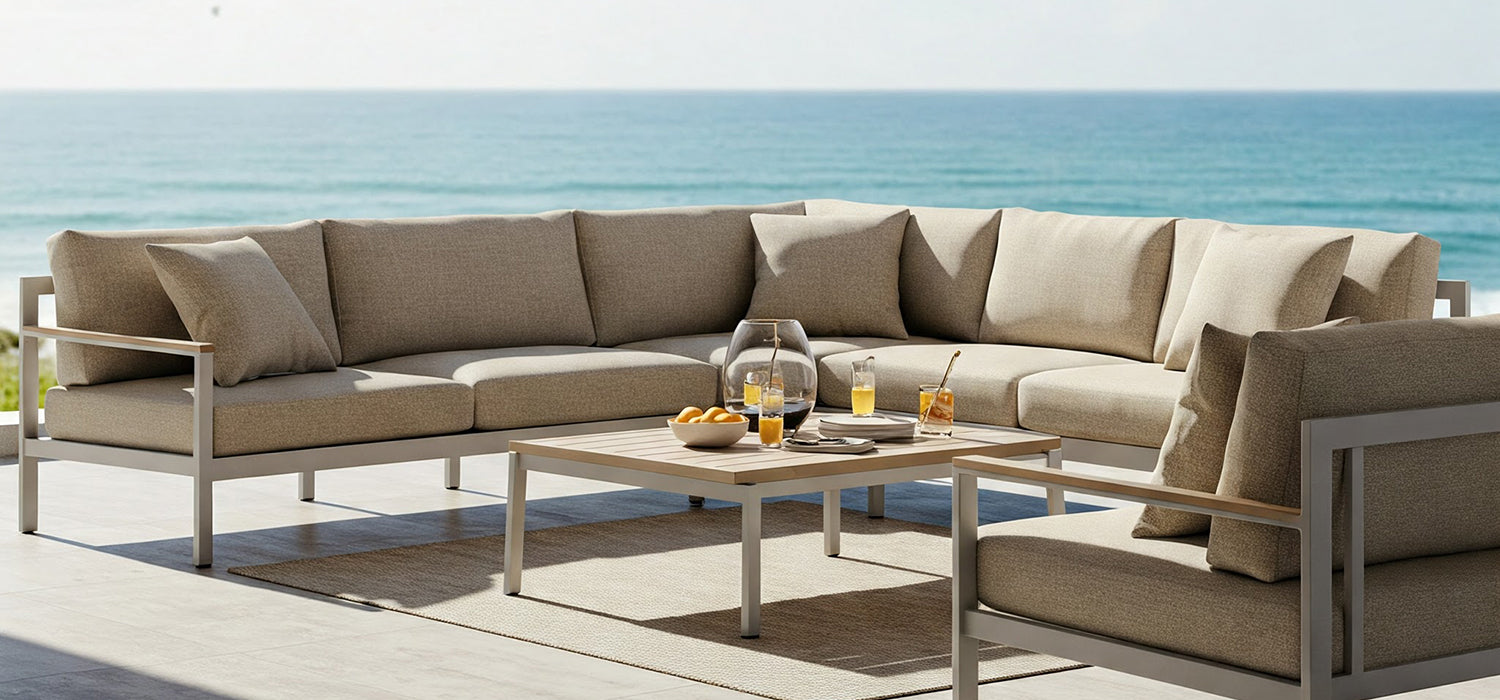
Living by the sea is a dream — until your garden furniture takes flight! The best furniture for coastal areas or windy spots? Look no further than heavy-duty pieces like powder-coated aluminium and teak, with corner sofas for extra comfort. Keep reading for tips on staying stylish and secure, no matter the weather!
Living in a coastal or windy spot offers stunning views and fresh air, but your garden furniture can face some serious challenges. Salt from the sea, strong winds, and high humidity can all wear down your outdoor pieces faster than you’d like. So, if you’re wondering how to keep your furniture in tip-top shape in these conditions, you’ve come to the right place. We’ll dive into how to choose the best materials, furniture designs, and maintenance tips to keep your garden looking great through the toughest weather.
Coastal areas are beautiful but unforgiving on furniture. The salty air can corrode metals, the humidity promotes mould growth, and the constant sea breeze doesn’t help either. Here’s what to look out for:
Saltwater is one of the biggest culprits when it comes to damaging garden furniture. It corrodes metal quickly, leading to rust spots and general wear and tear. If you’ve ever had a metal chair that started looking like it had been through a storm at sea, you’ll know exactly what we mean! To combat this, opt for materials that can resist saltwater corrosion. Powder-coated aluminium and marine-grade stainless steel are your best friends in this battle. They provide a strong protective layer that keeps the salt at bay, so your furniture stays looking fresh, season after season.
Humidity is another concern, especially in coastal areas where moisture is in the air all the time. It promotes mould and mildew, which can quickly ruin fabrics and wooden furniture. For fabrics, synthetic cushions are an excellent choice, as they won’t absorb moisture like their natural counterparts. Wood-wise, teak is a solid bet — it’s naturally resistant to moisture and will last for years without showing signs of decay. Teak also has that lovely natural oil that keeps it looking sharp even under humid conditions.
Windy spots are a whole different ballgame. Strong gusts can turn lightweight furniture into dangerous projectiles. To avoid chasing your chairs across the garden, you’ll need to think about weight, stability, and clever design. Here’s how to keep things grounded:
When it comes to windy areas, you want furniture that stays put, no matter how gusty the weather gets. Heavier pieces like chunky teak benches, cast aluminium tables, and concrete-top tables are perfect. These materials have the weight and strength to withstand strong winds. Plus, they’re stylish and built to last. I had a customer in Brighton who swapped her lightweight bistro set for a sturdy teak dining table. Since then, she’s stopped chasing chairs across the garden — or into her neighbour’s pond!
The design of your furniture can also help reduce the wind’s impact. Low, wide pieces, such as low-slung chairs or wide tables, are less likely to be blown over or pushed around by the wind. A low-profile design will allow the wind to pass over your furniture rather than pushing against it. It’s all about finding the right balance of form and function!
If your furniture is lightweight, don’t panic. There are still ways to keep it secure. Simple solutions like sandbags, planters, or even weighted covers can help anchor your furniture and prevent it from flying away. Some outdoor furniture even comes with options to tether it to the ground, ensuring it stays exactly where you want it.
Now, let’s get to the good stuff — the materials that will truly stand up to the test of coastal and windy conditions. These materials are tough, durable, and built to withstand the harsh elements of seaside life.
Powder-coated aluminium is a game-changer when it comes to coastal environments. It’s lightweight, corrosion-resistant, and incredibly durable. The powder coating provides an additional layer of protection against both saltwater and moisture, ensuring your furniture stays rust-free and looking great for years. Aluminium furniture won’t fade, peel, or flake, so it’s perfect for unpredictable weather.
For a more modern, sleek look, stainless steel is a fantastic option. Marine-grade stainless steel (316) is designed specifically to withstand corrosion from saltwater. It’s a bit pricier than regular stainless steel, but it’s worth the investment if you want long-lasting, rust-free furniture with a contemporary edge. Stainless steel’s sleek finish also adds a touch of elegance to any coastal garden.
If you want the timeless beauty of wood, teak is the top choice for coastal areas. This hardwood is naturally resistant to both moisture and salt, which means it can handle the seaside elements with ease. Over time, teak will weather into a gorgeous silvery grey, but if you prefer the golden-brown look, a simple teak sealant will keep it looking fresh. Teak’s natural oils make it resilient against humidity and salt, so it’s a great investment for your garden.
Wrought iron is incredibly sturdy, making it perfect for windy environments. It’s heavy, stable, and can withstand the strongest gusts. However, it’s essential to apply a rust-resistant finish to ensure it doesn’t deteriorate over time. Wrought iron can also be painted and repainted, so you can give it a fresh look when needed. Just be sure to treat it properly, and it will last a lifetime.
High-Density Polyethylene (HDPE) lumber is an eco-friendly, low-maintenance alternative to traditional wood. It’s made from recycled plastics, so it’s a sustainable choice for environmentally conscious shoppers. HDPE is resistant to moisture, won’t splinter, and is impervious to saltwater and humidity. If you’re looking for a wood-like appearance without the upkeep, HDPE lumber is a great choice for coastal environments.
Choosing the best outdoor furniture for coastal and windy environments isn’t just about style — it’s about practicality too. By selecting the right materials and designs, you can ensure your furniture will last through salty winds, stormy weather, and high humidity. Teak, powder-coated aluminium, and marine-grade stainless steel are among the top contenders for enduring both the weather and the elements.
No matter your style, there’s durable, weather-resistant furniture that can help transform your outdoor space into a beautiful, functional retreat. Ready to make your garden a coastal paradise that stands the test of time? With the right pieces, your furniture will remain as sturdy and stylish as the view.
Other articles our customers have found useful:

