

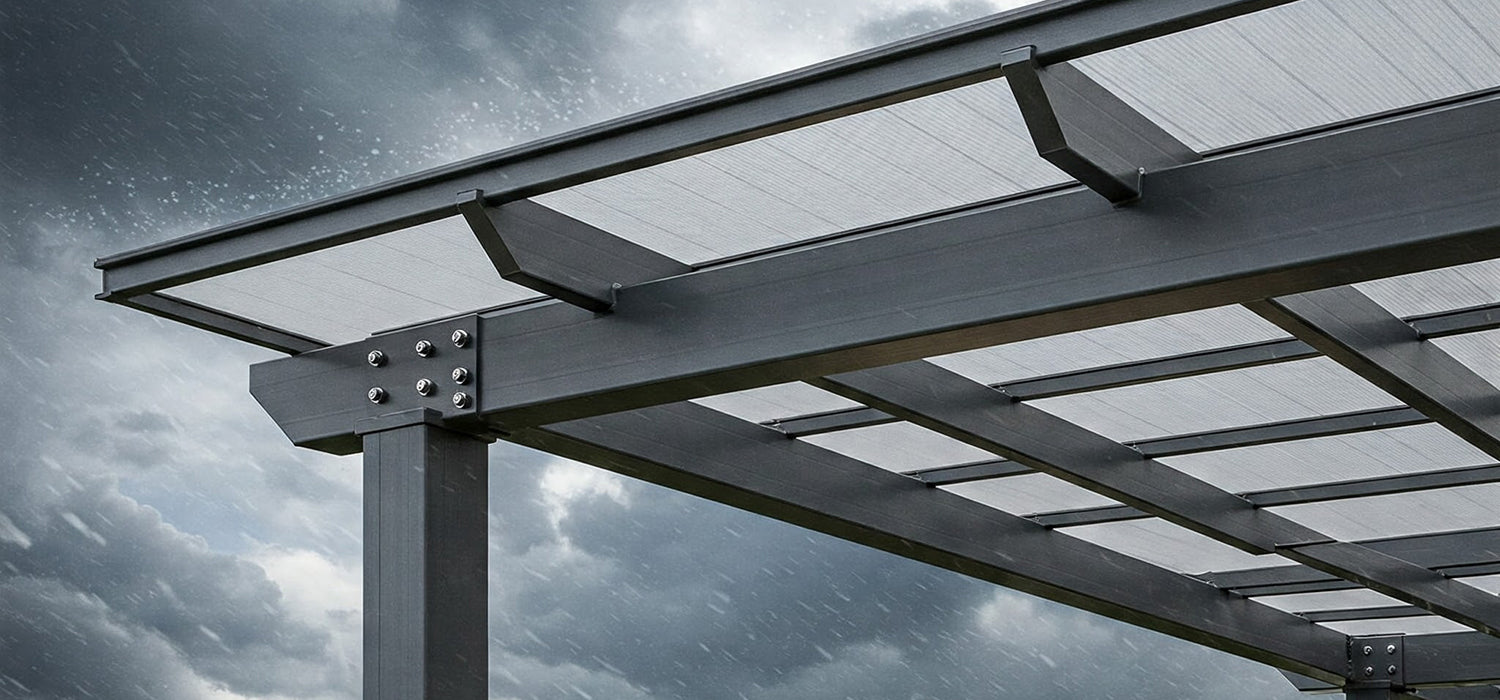
Worried your aluminium pergola might take flight like Mary Poppins’ umbrella? Short answer: not if it’s built and installed properly! In this breezy guide, we’ll unpack how design, anchoring, and smart materials keep your aluminium pergola sides grounded—even when the wind’s having a tantrum. Stick around for peace of mind!
Aluminium pergolas are a fantastic way to elevate your outdoor space. They’re sleek, modern, and perfect for enjoying the outdoors without getting too much sun. But, with unpredictable UK weather, one big question looms: Will those side panels flap around in the wind?
In this section, we’ll look at the elements that keep your pergola stable and secure against the gusty winds that seem to appear out of nowhere.
There are a few key factors that influence how well your pergola will hold up in the wind. Think of it as a game of strength, speed, and strategy. A well-built pergola can withstand a lot more than you might think, but it all comes down to these three elements.
Imagine you’ve got a flimsy piece of foil versus a solid metal plate in a windstorm. Which one do you think will hold up better? The same logic applies to your pergola side panels. Thicker, more solid aluminium panels are far better equipped to handle the pressure from wind. A well-constructed panel won’t warp or buckle easily under stress.
The best materials in the world won’t help if they’re not securely fastened. Poorly attached panels are a disaster waiting to happen when the wind picks up. That’s why top-quality, weather-resistant fasteners are a must. Opt for stainless steel screws or strong aluminium rivets. These materials are durable, resistant to corrosion, and ensure your pergola stays intact.
Even the sturdiest panels need a reliable frame to hold them up. A good pergola frame acts like the skeleton of the structure, giving it the strength to withstand pressure. If the frame is weak or poorly designed, the wind can easily destabilise your pergola, no matter how well it’s anchored.
Wind doesn’t just blow in a straight line. It’s got its own tricks up its sleeve. Let’s take a closer look at how wind impacts your pergola and what you can do about it.
When wind hits one side of your pergola, it’s not just pushing. It’s also pulling. This creates pressure on the sheltered side and suction on the exposed side. If your pergola isn’t securely fixed, those forces could cause the panels to detach or shift. It’s all about how your pergola handles the tug-of-war between pressure and suction.
Imagine trying to stand in the wind with a massive umbrella in front of you. The umbrella’s broad side faces the wind, and you get knocked over. Now, picture the umbrella turned sideways—much less impact! This is why the orientation of your pergola matters. By positioning the narrow side into the wind, you can dramatically reduce the force it faces.
Gusty winds are the cheeky troublemakers—they hit hard and fast, but they don’t last long. Constant winds, on the other hand, are more like a relentless, slow-moving force. Each type of wind affects your pergola differently. Gusts can catch the sides unexpectedly, while constant winds build pressure over time. Ensuring your pergola can withstand both types of winds is key to its long-term stability.
A windproof pergola doesn’t just happen. It takes careful planning, thoughtful design, and expert installation. Let’s break it down.
The material you choose for your pergola side panels is crucial. It’s like choosing the right shoes for a hike—get it right, and you’ll be comfortable no matter what the weather throws at you.
Solid aluminium panels are great for privacy and protection from the wind, but they can act like sails in heavy gusts. Slatted designs, however, allow wind to flow through, reducing pressure. If you’re after a balance of wind resistance and aesthetics, slatted designs are a popular choice.
Fabric and mesh sides might seem like a good idea for flexibility, but in strong winds, they can turn into sails themselves. If you go this route, look for fabrics designed for outdoor use and make sure they’re tensioned correctly to keep them in place during high winds.
The last thing you want is for your pergola to fall apart when a gust of wind hits. Secure attachment is essential for keeping everything locked in place.
One of the best ways to keep your pergola stable is by bolting and screwing the side panels directly to the frame. Make sure to use corrosion-resistant bolts that can stand up to the British weather, so your pergola stays secure for years to come.
In addition to bolts and screws, strong clips and fixings help keep your panels tightly secured. Look for fasteners that are specifically designed for outdoor use—these will hold up better against the elements.
A strong frame is the backbone of any stable pergola. It’s what keeps the structure upright and able to handle the forces of nature.
An aluminium pergola is only as strong as its foundation. Whether you’re anchoring it to concrete or the ground itself, it needs to be secured firmly. Consider using deep-set footings or anchors that won’t budge during windy weather.
Your pergola’s posts need to be large enough to bear the weight and stress of the structure. A frame with too-small posts or improperly spaced posts can quickly become unstable, especially when the wind picks up. Be sure to install posts that are thick enough to resist bending and spaced properly for maximum strength.
Sometimes, all it takes is a bit of strategic planning to minimise wind impact. Here’s how to help your pergola stay secure in any weather.
Choosing the right spot for your pergola is half the battle when it comes to wind resistance.
Before setting up your pergola, think about where the strongest winds come from in your area. If you’re in a coastal area, for example, you’ll want to position your pergola so it faces sideways to the wind, rather than head-on.
Take advantage of any natural features like trees, walls, or fences. These can act as windbreaks, helping to reduce the pressure on your pergola sides and protect your outdoor space from harsh winds.
Adding a few clever features to your pergola can make it even more wind-resistant.
Installing a windbreak or retractable screens can shield your pergola sides from gusty winds while offering extra privacy. These are easy to adjust depending on the weather, making them a versatile addition.
Louvered sides are a brilliant option for controlling airflow. You can open them slightly when you need a breeze, or close them when the wind picks up. This gives you full control over your pergola’s exposure to the elements.
Don’t forget about upkeep! A little maintenance goes a long way in keeping your pergola windproof.
Check for any loose fasteners or signs of wear and tear, particularly after a particularly blustery day. Tighten up any loose bolts and ensure that all panels are securely attached. Regular inspections help keep your pergola in top shape and ready to face whatever the wind throws its way.
So, will your aluminium pergola sides blow about in the wind? Not if you’ve taken the right steps in design, installation, and maintenance. A well-constructed, securely anchored pergola is ready to handle the unpredictable British weather, leaving you to enjoy your outdoor space without worrying about gusts and gales.
With the right materials, strong attachments, and regular upkeep, your pergola will stay firmly in place for years to come—no matter how wild the wind gets.

